Pedagogy · 12 August 2026
VP or VG: understanding the end-of-8P orientation in the canton of Vaud
Voie prégymnasiale or voie générale: what is at stake in 8P, how the decision is built, and why neither path closes doors. A clear guide for parents.
 By The SOS teaching team7 min readReviewed by the teaching team
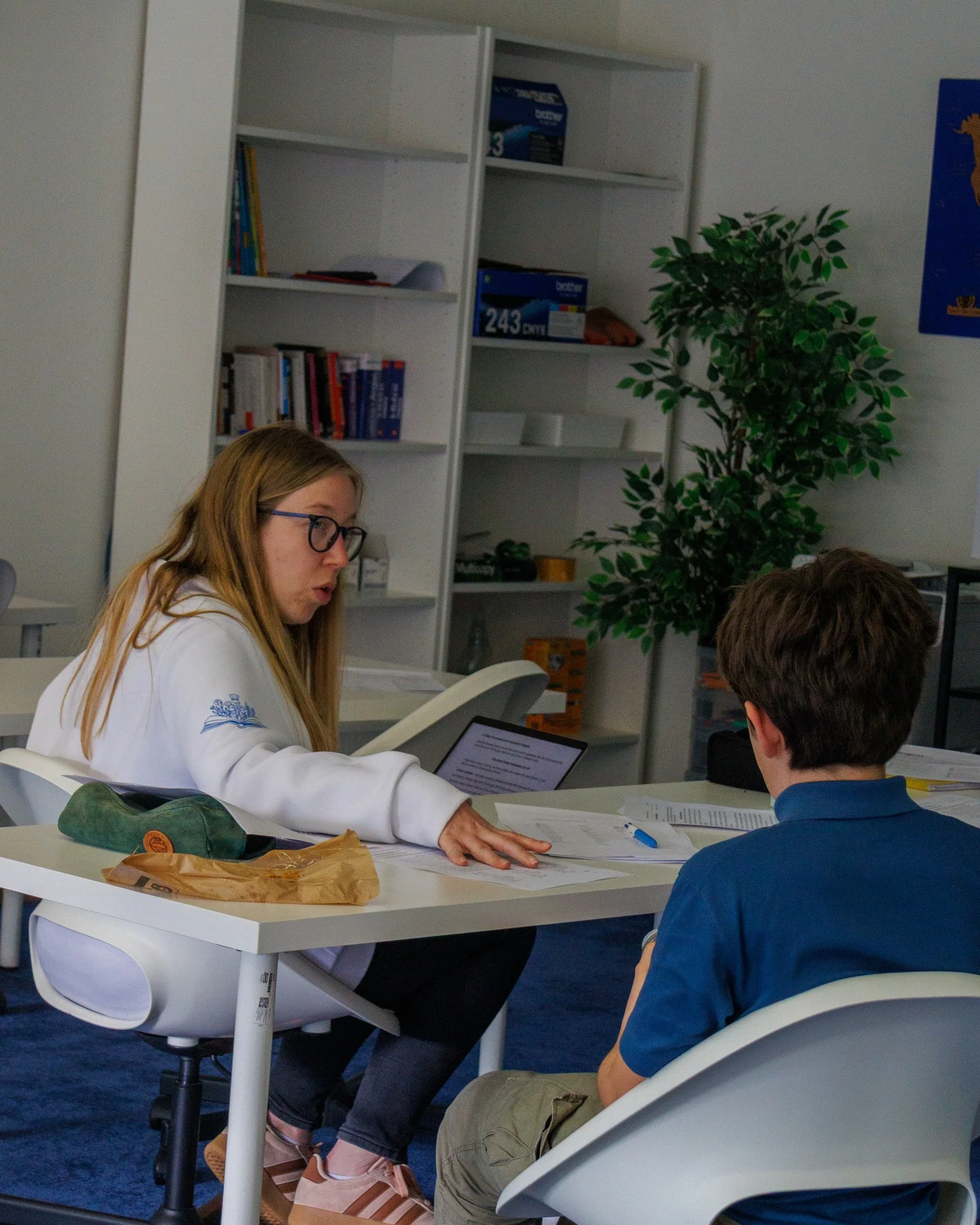
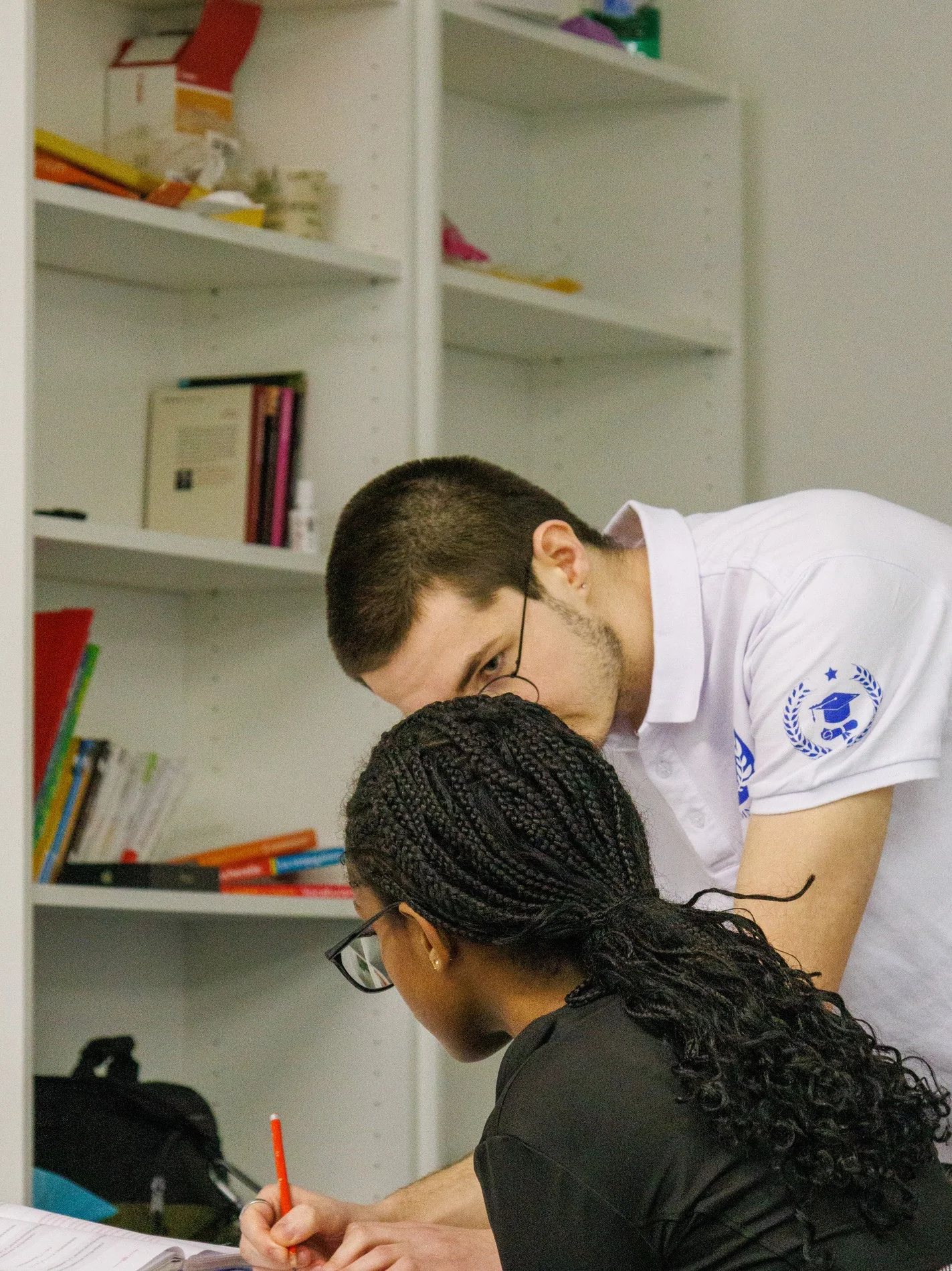
At the SOS Lausanne centre: understanding the system replaces the fear of orientation with a strategy. · Photo : Soutien-Omni-Scolaire
For many families in Vaud, 8P is the year the word “orientation” enters dinner-table conversations. At the end of that year, every pupil is streamed into one of the two tracks of secondary I: the voie prégymnasiale (VP) or the voie générale (VG). Here is how it works, and above all how to help your child live through that year calmly.
VP and VG: what are we actually talking about?
The voie prégymnasiale (VP) prepares, as its name suggests, for further studies at the gymnase, in particular towards the maturité. The voie générale (VG) prepares for the end-of-secondary certificate and opens onto vocational training (apprenticeship), general culture and business schools, or, via a raccordement, further studies.
In VG: level 1 or level 2, what does that actually mean?
This is the point many parents discover, especially those who did not grow up in the Swiss system. In the voie générale, three main subjects (French, mathematics and German) are taught at two levels of demand: level 1 (basic requirements) and level 2 (higher requirements).
The key thing to understand: these levels are set subject by subject. A pupil can be in level 2 in mathematics, their strong point, and level 1 in German. And nothing is fixed: level changes remain possible along the way, depending on results. The levels followed then play a role for what comes next, notably for access to the raccordement and to certain programmes. Concretely: aiming for level 2 in a subject means keeping doors open.
How the decision is built during 8P
The orientation is not the outcome of a single exam: it is built over the whole 8P year, from school results, with particular weight on French, mathematics and German, and the cantonal reference tests (ECR), which complete the picture. The process involves the school and the parents, with progress reviews during the year.
The practical consequence: what counts is steady work across the whole year, not a third-term sprint. A pupil who works consistently from September approaches the end-of-year milestones with a safety margin, and far less stress.
“The orientation is not a verdict: it is a snapshot at a given moment, and bridges exist in both directions.”
The SOS teaching team
Neither path closes doors
This is the most important message for parents, and for pupils too. A pupil oriented into VG is not “condemned” to give up on longer studies: the raccordement allows them, after Year 11, to reach the requirements needed to continue. Track changes also remain possible during secondary I, depending on results.
Conversely, VP is not an end in itself: a pupil who exhausts themselves there without finding their place can succeed brilliantly by another route. The Vaud system is built on bridges; knowing them replaces fear with strategy.
What parents can do concretely
- 1Explain the stakes calmly at the start of the year, without dramatising: your child should understand why they are working.
- 2Aim for regularity (homework at a fixed time, diary opened every evening) rather than catch-up sessions.
- 3Keep a particular eye on French, mathematics and German, the decisive subjects.
- 4Talk to the teacher as soon as a doubt appears: they know the process and the criteria.
- 5Remind your child that no orientation is final: raccordements and bridges exist.
What if 8P starts with difficulties?
If last year left gaps in French, mathematics or German, 8P is the wrong year to “wait and see”. The first weeks are the right moment to consolidate the basics: the curriculum is still at its beginning, deadline pressure is far away, and every point regained counts double when the orientation comes.
That is exactly the work we do in our centres in Vevey, Lausanne and Montreux: a free educational assessment to identify the gaps precisely, then regular support (private lessons, semi-private lessons or supervised study) with a report to parents after every session.
A small glossary for parents
- 18P: the last year of primary school, and the orientation year.
- 2VP (voie prégymnasiale): prepares for further studies at the gymnase, towards the maturité.
- 3VG (voie générale): prepares for the certificate, apprenticeship and schools, with further studies possible via the raccordement.
- 4Level 1 / level 2 (in VG): two degrees of demand in French, mathematics and German, level 2 being the higher requirements.
- 5ECR: the cantonal reference tests, taken by all pupils in the canton.
- 6Raccordement: the bridge that allows pupils, after Year 11, to continue their studies.
Official information on the organisation of secondary I in Vaud and the orientation process is published by the Canton of Vaud on vd.ch (Direction générale de l’enseignement obligatoire).
Going further
- After orientation: what changes in the 9th year
- Promotion, orientation, certification: do not confuse them
- Our mock exams under real conditions
- Our article: preparing for back to school in the canton of Vaud
- Preparing the ECR with method
- Preparing the Year 11 exams (VP and VG)
- Preparing for gymnase entry
- Supervised study: steady work all year
What actually changes
A specialist for each subject
Not a generalist covering everything: a teacher whose discipline it is, chosen after the assessment.
Every branch covered
Maths, French, German, English, sciences, economics and accounting, from primary school to the maturité.
Progress measured, not assumed
Every session is measured against the real Vaud thresholds: promotion points, levels, ECR, certificate.
A written report after every session
You know what was covered, what is secure and what still needs work. Without having to ask.
Soutien-Omni-Scolaire
Difficulties that persist?
A teacher who specialises in their subject, across every branch: maths, French, German, English, sciences, economics and accounting. From primary school to gymnasium, in centre, at home or online.
First conversation, no commitment
Parents' frequently asked questions
When does the VP or VG orientation take place in the canton of Vaud?
At the end of 8P, the last year of primary school. The decision is built over the whole year, from school results and the cantonal reference tests (ECR), with progress reviews involving the school and the parents.
Which subjects count most for the orientation?
French, mathematics and German carry particular weight in the orientation process. Those are the three subjects where steady work and, if needed, targeted support has the greatest impact.
What do levels 1 and 2 mean in VG?
In the voie générale, French, mathematics and German are followed at level 1 (basic requirements) or level 2 (higher requirements), subject by subject. A pupil can be in level 2 in one subject and level 1 in another, and level changes remain possible depending on results. The levels followed play a role for the rest of the pathway, notably for the raccordement.
My child is oriented into VG: can they still pursue longer studies?
Yes. The raccordement allows them, after Year 11, to reach the requirements needed to continue their studies, and track changes remain possible during secondary I depending on results. No orientation is final.
How can SOS help during the 8P year?
With a free educational assessment to identify the gaps precisely, then regular support in French, mathematics and German (private lessons, semi-private lessons or supervised study) in our centres in Vevey, Lausanne and Montreux, with a report to parents after every session.
The SOS teaching team
Tutoring · Canton of Vaud
A teaching team specialised in the Vaud school system: ECR preparation, VP and VG orientation, raccordement, gymnase entry and maturité. Centres in Vevey, Lausanne and Montreux.
Meet the SOS team →