Pedagogy · 24 September 2026
Promotion, orientation, certification: three words people confuse
Promotion, orientation and certification come up in the same sentences and yet describe three different acts, at three different moments. This guide separates them clearly, gives the full calendar and shows what the confusion actually costs families.
 By The SOS teaching team8 min readReviewed by the teaching team
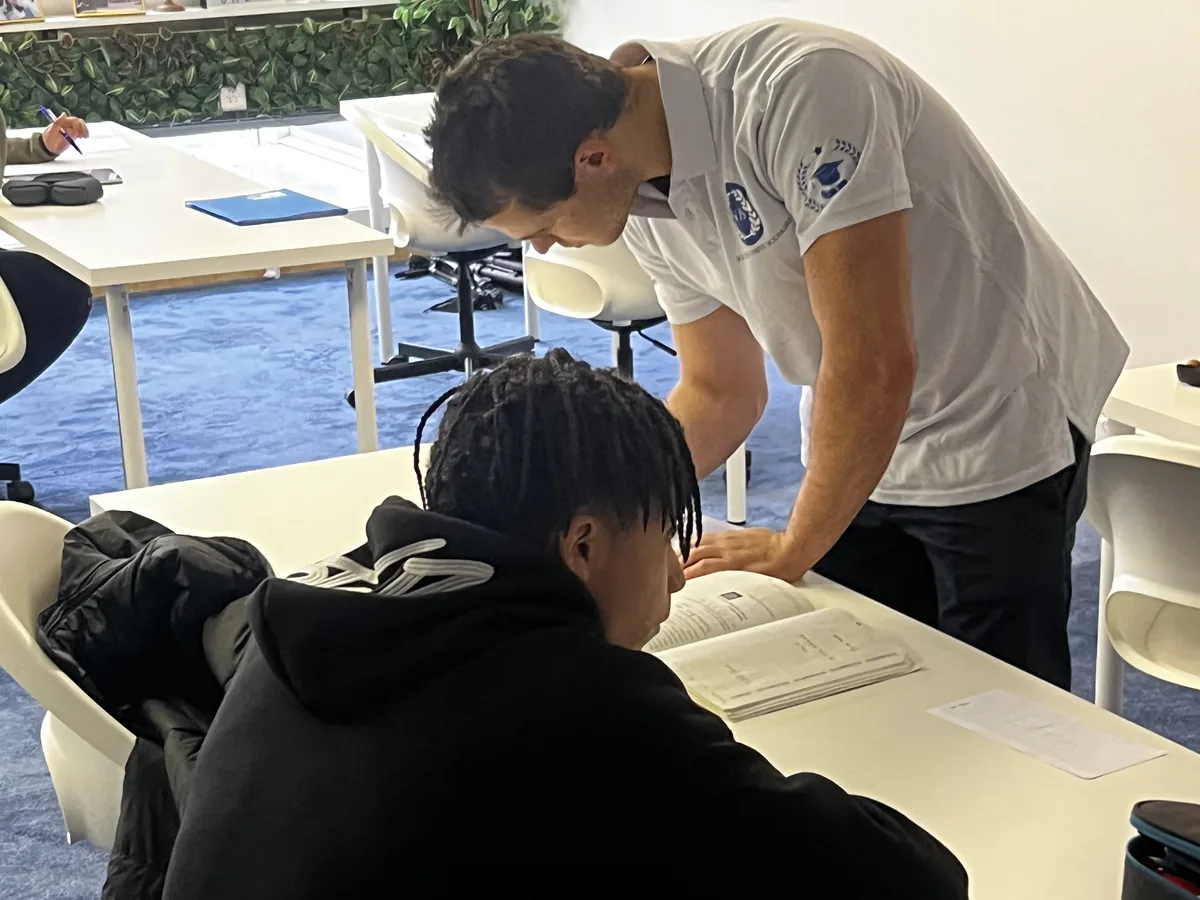
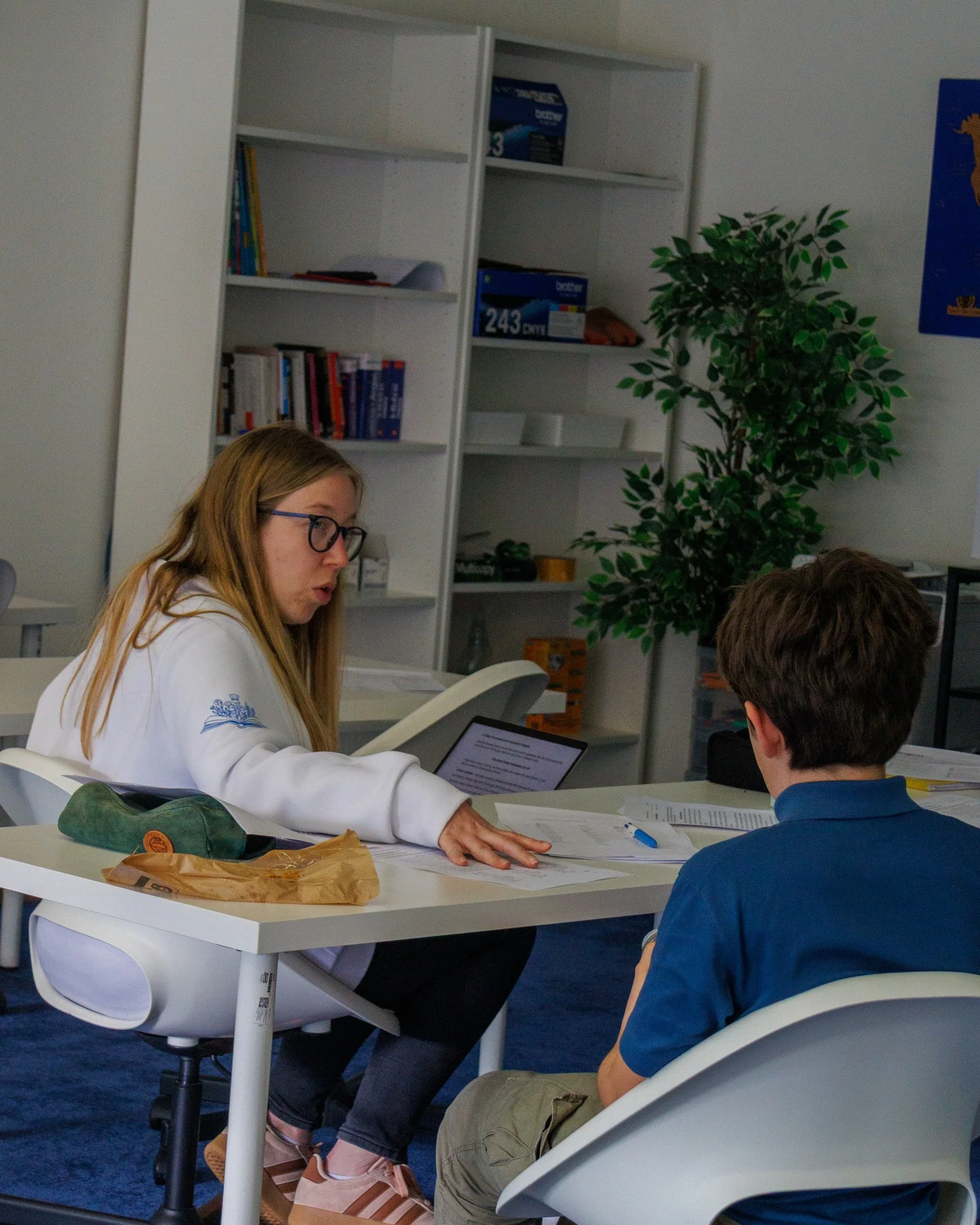
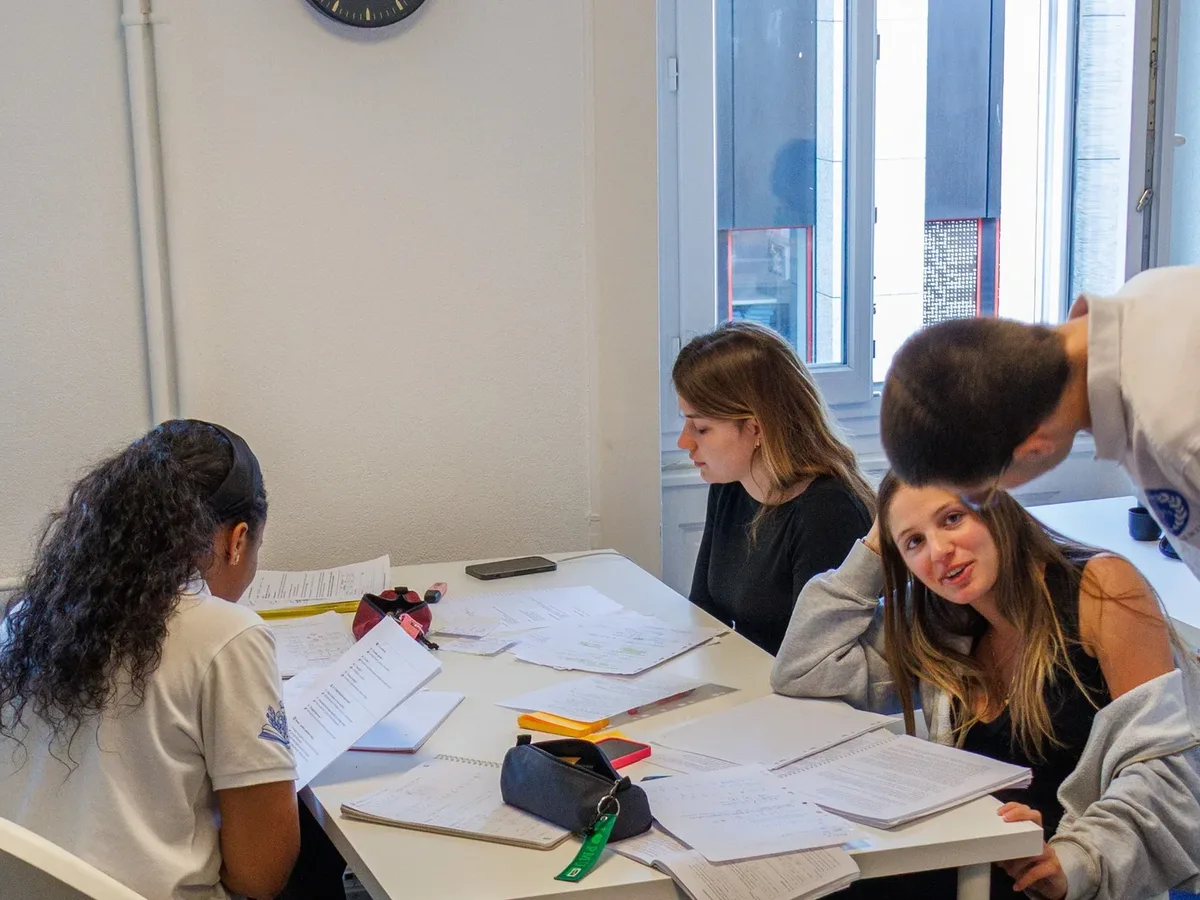
Three decisions, three calendars: knowing which one is at stake today determines where to put the effort. · Photo : Soutien-Omni-Scolaire
Three decisions, three different logics
The three words come up in the same conversations, often in the same sentence, and yet they describe three distinct acts. They do not occur at the same moments, do not rest on the same criteria and do not carry the same consequences. Confusing them leads to acting at the wrong moment, which is the quietest way to lose a year.
The distinction fits in one sentence. Promotion decides whether your child moves up to the next year. Orientation decides in which track and at which level they will do so. Certification attests, at the very end, that compulsory schooling has been completed.
Promotion: moving up to the next year
Promotion is the act by which the school authorises a student to move up to the next year. It occurs at the end of each school year and is based on the annual results, added up by groups of subjects.
It is the easiest decision to understand, and the one that worries parents most, because failing it carries a heavy name: repeating the year. Yet it is also, paradoxically, the least decisive of the three for the rest of the pathway. A student promoted every year without difficulty can still end up in a track that closes doors; a student who has repeated once can perfectly well reach gymnasium. Promotion measures whether the year has been secured, not where it leads.
Orientation: which track, which level
Orientation is the decision that places a student in a track and at a level. It is the one that genuinely commits the future, and the one parents watch least, because it plays out at moments less visible than the end of the year.
It occurs on three distinct occasions. At the end of the 8th year, it splits students between the voie prégymnasiale and the voie générale: this is the most structuring orientation decision of the whole of compulsory schooling. At the end of the 9th and 10th years, reorientations between tracks remain possible. And at the end of each semester, from the end of the first semester of the 9th year to the end of the first semester of the 11th, changes of level can occur in French, maths and German.
This last point is the one we repeat most often to families. Changes of level are decided twice a year, not once. A parent who only has June in mind lets half the opportunities to act go by.
“Promotion is observed at the end of the year. Orientation is built during the year, and decided several times a year.”
The SOS teaching team
Certification: the school-leaving certificate
Certification confers a qualification attesting the completion of a cycle. In Vaud compulsory schooling, it occurs only once: at the end of the 11th year, with the certificate of completion of secondary studies.
That certificate is not an administrative formality. It is what conditions direct access to post-compulsory education: école de maturité, école de culture générale, or an apprenticeship. Its nature depends on the track followed, and that is precisely where the orientation taken three years earlier, at the end of 8P, produces its concrete effects.
The full calendar, at a glance
| When | Decision | What it is |
|---|---|---|
| End of each school year | Promotion | Moving up to the next year, on point totals by groups of subjects |
| End of the 8th year | Orientation | Split between the voie prégymnasiale and the voie générale |
| End of the 1st semester, 9th to 11th year | Orientation | Change of level in French, maths and German |
| End of the 9th and 10th years | Orientation | Reorientation between tracks is possible |
| End of the 11th year | Certification | Certificate of completion of secondary studies |
Read this way, the calendar shows something the reports never state: between the 9th and 11th years there are five orientation decision points, against three promotion ones. In sheer frequency, orientation is therefore the most active decision in the system.
Why the confusion is costly
A parent who only watches promotion looks at the point total and is reassured as soon as it clears the threshold. They can thus go through a whole year without seeing their child slip from level 2 to level 1 in German, which puts promotion in no danger at all but closes, three years later, direct access to the école de culture générale.
Conversely, a parent alarmed by a possible repeat year may concentrate every effort on the weakest subjects, when the real stake lies in the subjects that govern orientation: French, maths and German.
The three questions to ask at the right moment
- 1In January, from the 9th to the 11th year: is a change of level at stake this semester, and in which subject?
- 2At the end of 8P: which track, and on what point totals is the decision taken?
- 3At the end of the 9th and 10th years: is a reorientation between tracks possible, and under what numerical conditions?
- 4In the 11th year: which certificate does the current pathway allow, and which courses it opens.
What this changes in practice
The consequence is simple and it comes down to one habit. Every time a report arrives, in January as in June, the first question is not “is this a pass”, but “which decision is being taken today, and which one is being prepared for next time”. The first question reassures or alarms; the second makes it possible to act.
This is also what separates useful support from mere catching up. Catching up a mark is working on promotion. Aiming for a change of level or a reorientation is working on orientation, and that requires knowing precisely which threshold serves which decision, and on what date.
How we work with these three decisions
At Soutien-Omni-Scolaire, the first session never begins with an exercise. It begins by placing the student on this calendar: which decision is at stake this year, which one is being prepared for next year, and what numerical gap separates the student from the next threshold. It takes one session, and it changes everything that follows, because you stop working on marks in general and start working on the decision that is coming.
In practice, a 9th-year student whose stake is a change of level in German does not follow the same programme as an 11th-year student preparing their certificate. The first must reach an average of 5.5 over one semester, in a single subject. The second must hold two point totals at once and sit an oral in four subjects. Confusing the two means making a child work hard, but in the wrong place.
Our mock exams follow the same logic: they reproduce the assessment that matters to the student at that precise point in their pathway, under real conditions, oral included for 11th-year students. And our three centres in Vevey, Lausanne and Montreux all work to the Vaud calendar, not to a generic syllabus. If you do not know which decision is at stake for your child this year, that is exactly the question to ask us at the assessment, which is free.
Note: procedures may change and their application rests with the school. If in doubt, the school management is the authority.
Going further
What actually changes
A specialist for each subject
Not a generalist covering everything: a teacher whose discipline it is, chosen after the assessment.
Every branch covered
Maths, French, German, English, sciences, economics and accounting, from primary school to the maturité.
Progress measured, not assumed
Every session is measured against the real Vaud thresholds: promotion points, levels, ECR, certificate.
A written report after every session
You know what was covered, what is secure and what still needs work. Without having to ask.
Soutien-Omni-Scolaire
Difficulties that persist?
A teacher who specialises in their subject, across every branch: maths, French, German, English, sciences, economics and accounting. From primary school to gymnasium, in centre, at home or online.
First conversation, no commitment
Parents' frequently asked questions
What is the difference between promotion and orientation in the canton of Vaud?
Promotion decides whether the student moves up to the next year and is ruled at the end of each school year. Orientation decides in which track and at which level they will follow it, and is ruled at the end of 8P, at the end of the 9th and 10th years, and at the end of each semester between the 9th and 11th for changes of level.
When does orientation into the voie prégymnasiale or générale take place?
At the end of the 8th year. It is the most structuring orientation decision of compulsory schooling, since it determines direct access to gymnasium at the end of the 11th year.
Can a student change level during their schooling?
Yes. Changes of level in French, maths and German can occur at the end of each semester, from the end of the first semester of the 9th year to the end of the first semester of the 11th. That is five opportunities, not a single one at the end of the year.
What is certification in Vaud compulsory schooling?
It is the award of the certificate of completion of secondary studies, at the end of the 11th year. It attests the completion of compulsory schooling and conditions access to post-compulsory education.
Does repeating a year prevent access to gymnasium?
No. Promotion measures whether the year has been secured, not where it leads. Bridges and raccordement routes exist, with precise numerical conditions, and a student who has repeated a year can reach gymnasium.
The SOS teaching team
Tutoring · Canton of Vaud
A teaching team specialised in the Vaud school system: ECR preparation, VP and VG orientation, raccordement, gymnase entry and maturité. Centres in Vevey, Lausanne and Montreux.
Meet the SOS team →