Success · 13 August 2026
ECR: what the cantonal reference tests are really for (canton of Vaud)
The complete ECR guide for parents in Vaud: what they are, year by year (4P, 6P, 8P), what they are not, how results are communicated, and the key figure: in 8P they count for 30% of the orientation averages.

 By The SOS teaching team10 min readReviewed by the teaching team
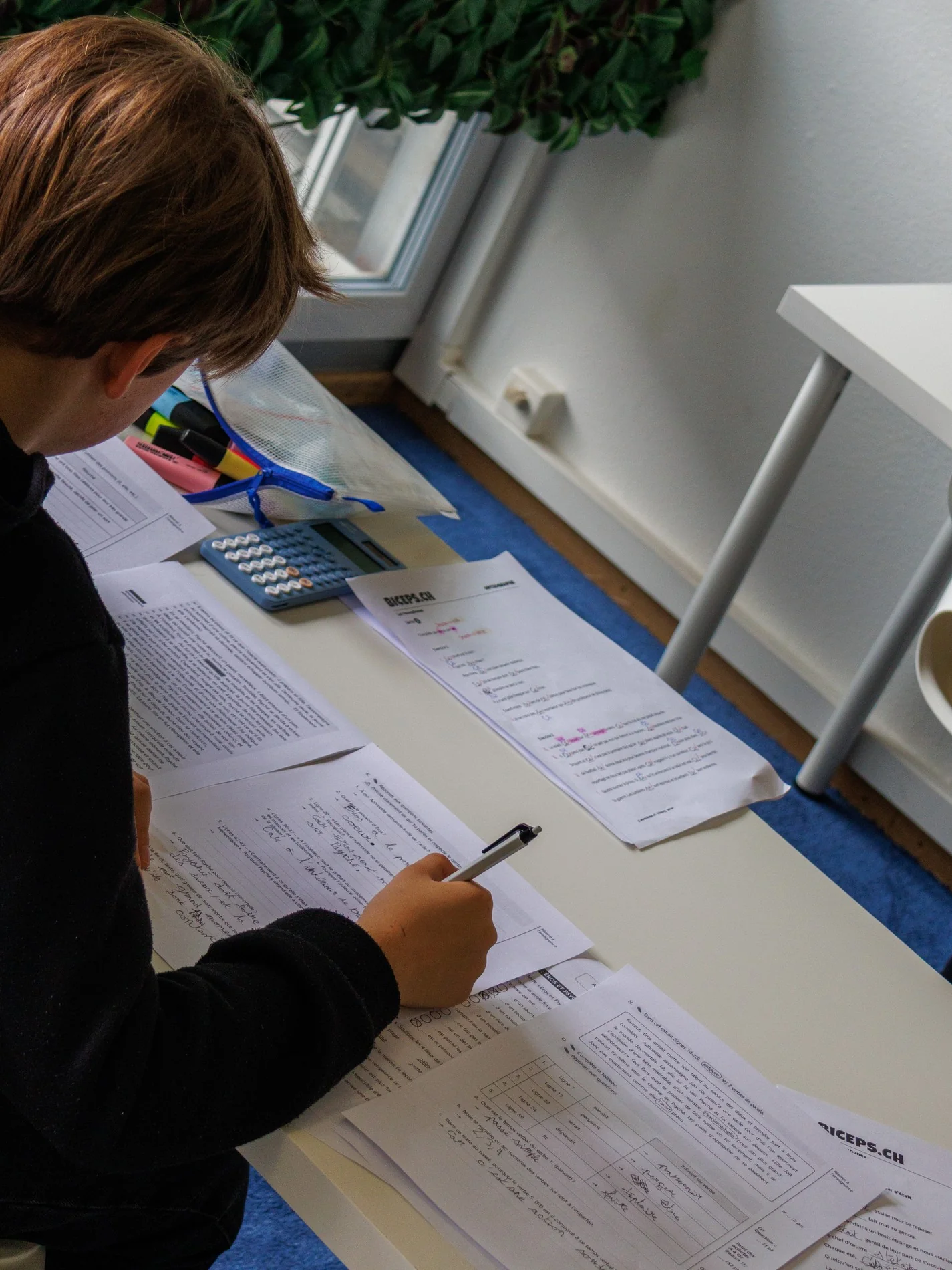
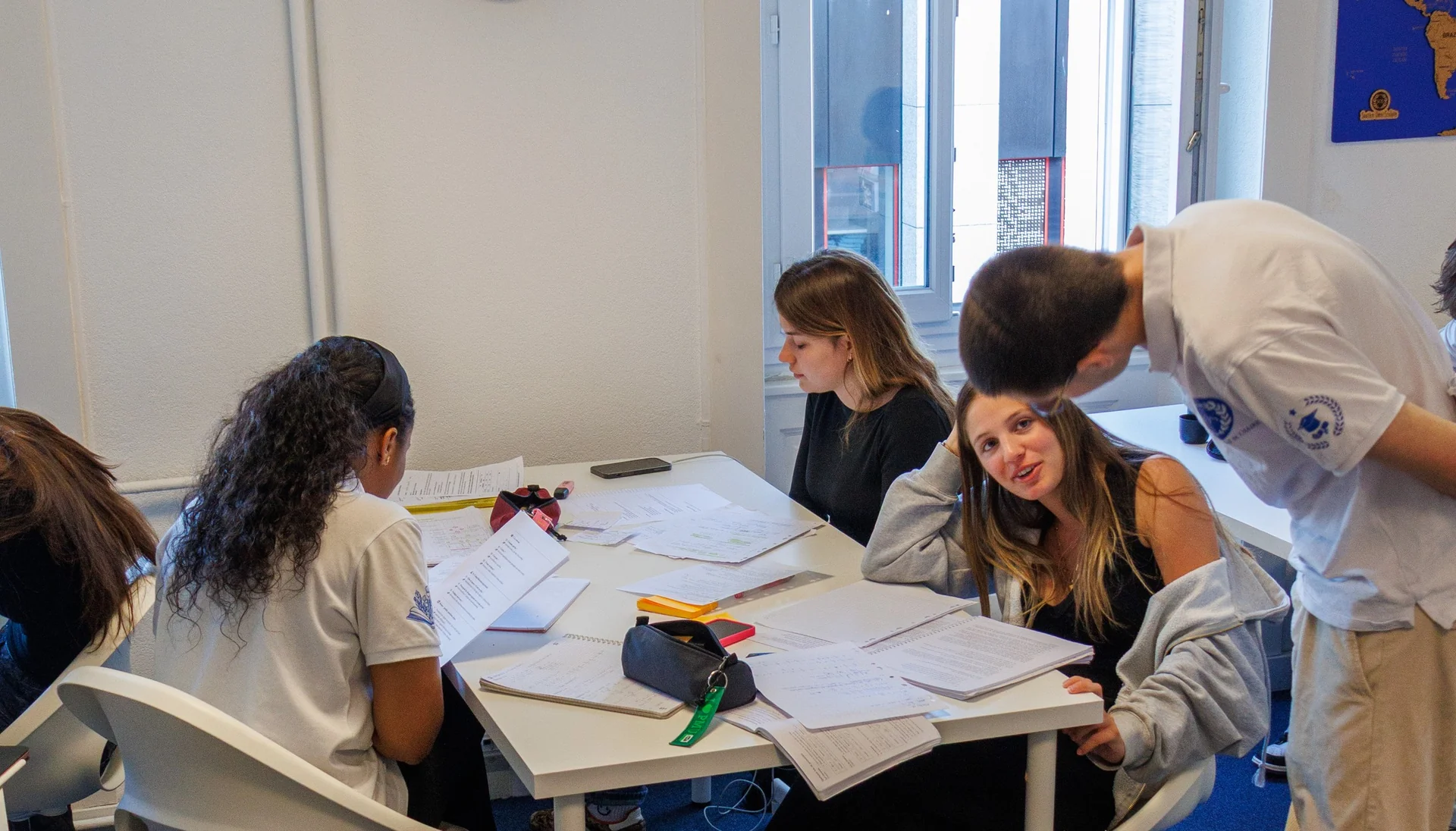
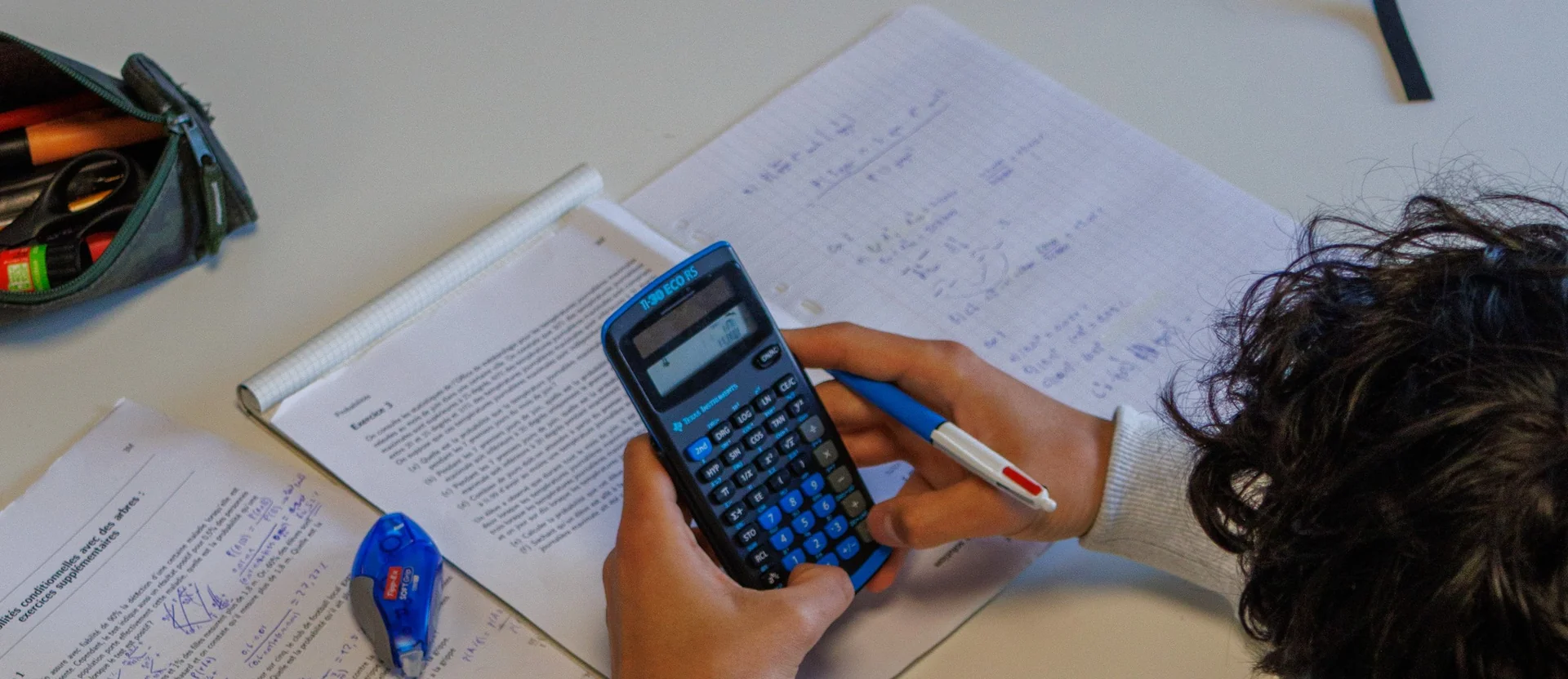
At an SOS centre: the ECR assess knowledge built over the whole year, not a stroke of luck in May. · Photo : Soutien-Omni-Scolaire
Every spring, three letters come up in schoolbags and family conversations across the canton of Vaud: ECR. Many parents hear about them without knowing exactly what they are, how much they really weigh in their child’s path, or even whether it is possible to “fail” them.
This article covers the whole question, calmly and on the basis of the canton’s official information. Understanding the ECR already removes a good part of the stress they cause, for pupils and parents alike.
What exactly are the ECR?
ECR stands for épreuves cantonales de référence (cantonal reference tests). They are identical tests, taken by every pupil in the canton in the same year and under the same conditions. Officially, they have two aims: to contribute to the quality of the school system and to harmonise teaching requirements from one school to another, from Lausanne to the Riviera.
In practice, they check that the objectives of the Plan d’études romand (PER), the curriculum shared across French-speaking cantons, have been reached, through themed activities. They give the teacher an external reference point for situating each pupil’s progress against a cantonal benchmark.
A reassuring, little-known detail: the ECR are designed with a working group of classroom teachers, supported by subject-teaching specialists from the university of teacher education (HEP). They are not traps handed down from above, but tests aligned with what is actually taught in class.
What the ECR are not: three misconceptions
First misconception: “you can fail the ECR”. No. The ECR are not an exam with a pass or fail threshold. They are reference tests: the result situates the pupil against a cantonal average; it does not fail them or hold them back.
Second misconception: “the ECR decide everything”. Also false. They complement the continuous classroom assessment carried out all year; they do not replace it. Their weight is framed, and it varies by year, as we will see.
Third misconception: “you have to cram for weeks”. That is even counterproductive. The ECR measure knowledge built over the whole year, not a last-minute performance. A steady pupil has, in truth, very little specific preparation to do.
Year by year: 4P, 6P, 8P
Not all years carry the same stakes. The number of subjects, and above all the weight of the ECR, grow with the pupil’s age. This is the most useful thing to understand so as not to worry at the wrong moment.
In 4P, there is a single test, in French. Its results are taken into account for supplementary guidance only: they give a reference point, but do not directly influence the promotion decision. The stakes are low; the main value is to get the child used to the format of a common test.
In 6P, there are two tests, in French and mathematics. Here the results carry the value of significant coursework: they count as an important assignment in the year’s assessment, without being decisive on their own.
In 8P, there are three tests: French, mathematics and German. This is the year when everything changes, because it is the orientation year into the voie prégymnasiale (VP) or the voie générale (VG). It is also when the weight of the ECR becomes genuinely significant.
The real weight of the ECR in 8P: the figure to know
This is the point most parents miss, and the most important one. In 8P, the ECR results count for 30% of the annual averages used in promotion and orientation decisions.
Thirty percent is neither trivial nor decisive on its own, and that is exactly the point. The remaining 70% comes from the whole year’s results. A steady pupil therefore keeps control of what matters most, but the ECR weigh enough to deserve real preparation, without drama.
It is also worth distinguishing two things these averages feed into: promotion, that is moving up to the next year, and orientation, that is the streaming into VP or VG at the end of 8P. Both are decided from the same annual averages, of which the ECR make up 30%.
“A good ECR does not save a neglected year, and a failed ECR does not condemn a serious one.”
The SOS teaching team
The essentials on the ECR
- 1Identical tests for the whole canton, to situate and harmonise, not to trip pupils up.
- 24P: French; 6P: French and maths; 8P: French, maths and German.
- 3They are not exams: you do not “fail” them, they serve as a reference.
- 4In 8P, they count for 30% of the annual promotion and orientation averages.
- 5They take place around late April or early May, and complement the year’s work.
How and when do you get the results?
Another reassuring point many parents miss: you are never left in the dark. Parents and pupils are informed in advance of the objectives of each ECR and of the exact test date, then of the results in due course. From 3P onward, these results appear in the school report (bulletin).
In other words, you know when the test takes place, what it assesses, and where your child stands once the results are known. Nothing happens in secret.

How to prepare, without turning the year into stress
The best preparation for the ECR does not start in April. It starts in September, with steady work in the subjects concerned. A pupil who works seriously all year has, in truth, almost nothing special to do when the tests come.
In the weeks before, a few simple habits help: redoing past papers to get used to the format and the time allowed, reviewing key ideas rather than rereading everything, and sleeping normally the night before. Panic and a sleepless night do more damage than an imperfectly revised chapter.
By subject, the right reflex differs a little. In French, regular reading and a few comprehension exercises beat passive rereading. In mathematics, redo typical exercises, pen in hand, rather than rereading a notebook. In German, a little vocabulary and grammar each week anchors far more than one block of revision the night before.
The real challenge is not knowing that you should work regularly; it is holding that regularity across a whole year, between homework, tiredness and other subjects. That is exactly what a steady outside framework provides: at SOS, supervised study (études surveillées) builds that structured rhythm week after week, and for 8P pupils, ECR preparation focused on French, mathematics and German consolidates precisely what the tests assess.
The trap to avoid is last-minute cramming, which tires without consolidating. The ECR assess knowledge built over the year; you cannot recover in a weekend what played out over months.
What if my child is stressed, or starts with gaps?
ECR stress is often the stress of the unknown. A child who knows what to expect, who has already seen the format of a test and who understands that 30% is not 100%, approaches May far more calmly. That is where parents come in: inform and reassure, do not add pressure.
If gaps are settled in French, mathematics or German, it is better to address them early, from the autumn, than to discover the problem in April. That is exactly the work we do in our centres in Vevey, Lausanne and Montreux: a free educational assessment to pinpoint the gaps, then regular support, with a report to parents after every session. The goal is not to cram for the ECR, but to solidify the foundations they assess.
The official framework, in plain terms
The ECR fall under the law on compulsory schooling (LEO) and its implementing regulation, and their procedures are set by the canton’s general assessment framework (Cadre général de l’évaluation). Up-to-date information (years concerned, subjects, objectives and the precise calendar for the current year) is published by the Canton of Vaud on vd.ch (Direction générale de l’enseignement obligatoire).
A small glossary for parents
- 1PER (Plan d’études romand): the curriculum shared across French-speaking cantons, which the ECR check.
- 2Promotion: moving up to the next school year.
- 3Orientation: at the end of 8P, the streaming into voie prégymnasiale (VP) or voie générale (VG).
- 4Bulletin: the official report where results appear, from 3P onward.
- 5LEO: the law on compulsory schooling, the legal framework for assessment in Vaud.
| Year group | Subjects assessed | Counts towards the average? |
|---|---|---|
| 4P | French | No |
| 6P | French, maths | No |
| 8P | French, maths, German | Yes — 30 % of the annual average in each subject |
Going further
- The Vaud report: how an ECR enters the average
- Our mock exams under real conditions
- Supervised study: steady, structured work all year
- ECR preparation: focused support
- Private lessons: closing gaps one by one
- Our article: VP or VG, understanding the end-of-8P orientation
- Our article: preparing for back to school in the canton of Vaud
What actually changes
A specialist for each subject
Not a generalist covering everything: a teacher whose discipline it is, chosen after the assessment.
Every branch covered
Maths, French, German, English, sciences, economics and accounting, from primary school to the maturité.
Progress measured, not assumed
Every session is measured against the real Vaud thresholds: promotion points, levels, ECR, certificate.
A written report after every session
You know what was covered, what is secure and what still needs work. Without having to ask.
Soutien-Omni-Scolaire
Difficulties that persist?
A teacher who specialises in their subject, across every branch: maths, French, German, English, sciences, economics and accounting. From primary school to gymnasium, in centre, at home or online.
First conversation, no commitment
Parents' frequently asked questions
What does ECR mean?
ECR stands for épreuves cantonales de référence: identical tests taken by every pupil in the canton of Vaud in the same year, to situate each pupil against a common reference and harmonise requirements between schools. They check the objectives of the Plan d’études romand (PER).
In which years are the ECR taken in the canton of Vaud?
In 4P (French), 6P (French and mathematics) and 8P (French, mathematics and German). They take place every year around late April or early May; the exact dates are set by the canton and communicated in advance.
Can you fail the ECR?
No. The ECR are not an exam with a pass or fail threshold: they are reference tests that situate the pupil against a cantonal average. They count towards the year’s averages, but you do not “fail” them the way you fail an exam.
How much do the ECR weigh in the 8P orientation?
In 8P, the ECR count for 30% of the annual averages used in promotion and orientation decisions into the voie prégymnasiale (VP) or the voie générale (VG). The remaining 70% comes from the whole year’s results: they are an important element, but not the only one.
Do the 4P and 6P ECR count?
In 4P, results are taken into account for supplementary guidance only and do not directly influence promotion. In 6P, they carry the value of significant coursework in the year’s assessment. The strong weight only really arrives in 8P.
How and when do you get the results?
Parents and pupils are informed in advance of the ECR objectives and of the exact test date, then of the results in due course. From 3P onward, the results appear in the school report (bulletin).
What is the difference between promotion and orientation?
Promotion is moving up to the next year. Orientation is the streaming into VP or VG at the end of 8P. Both are decided from the same annual averages, of which the ECR are part in 8P.
How can you prepare for the ECR without stress?
By working steadily all year in the subjects concerned, then, as the tests approach, redoing a few past papers to get used to the format, without last-minute cramming. A normal night’s sleep beforehand beats a panic revision.
Can a single poor ECR tip the orientation on its own?
No. In 8P the ECR weighs 30%: a one-off underperformance is cushioned by the year’s results, and conversely a good ECR does not make up for a neglected year. Regularity is the best protection.
The SOS teaching team
Tutoring · Canton of Vaud
A teaching team specialised in the Vaud school system: ECR preparation, VP and VG orientation, raccordement, gymnase entry and maturité. Centres in Vevey, Lausanne and Montreux.
Meet the SOS team →