Success · 26 August 2026
How to prepare for the ECR in the canton of Vaud: a year-by-year guide
The ECR are not prepared the night before: they reward steady work across the whole year. Here, year by year (4P, 6P, 8P), is what is assessed, how to practise for real, and why starting early changes everything. A concrete guide to support your child without stressing them.
 By The SOS teaching team10 min readReviewed by the teaching team
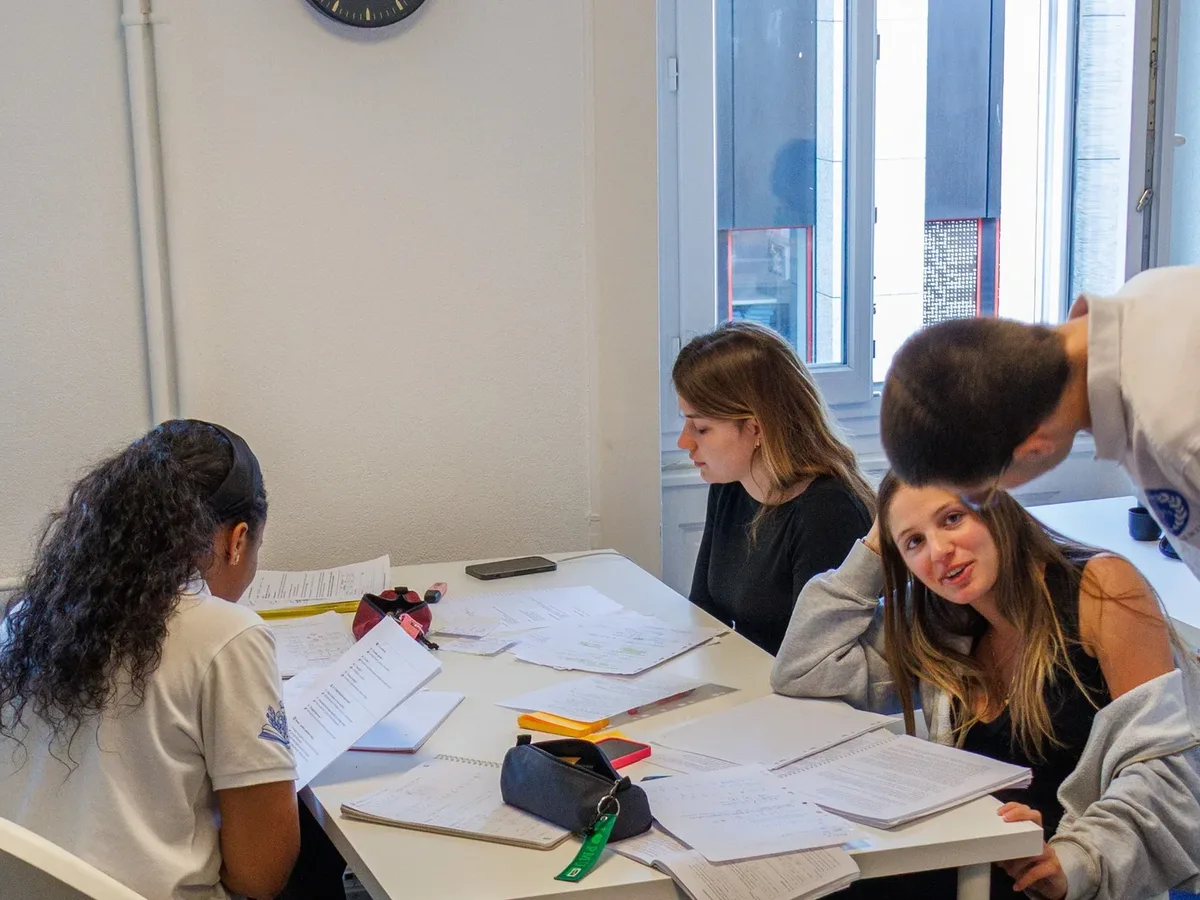
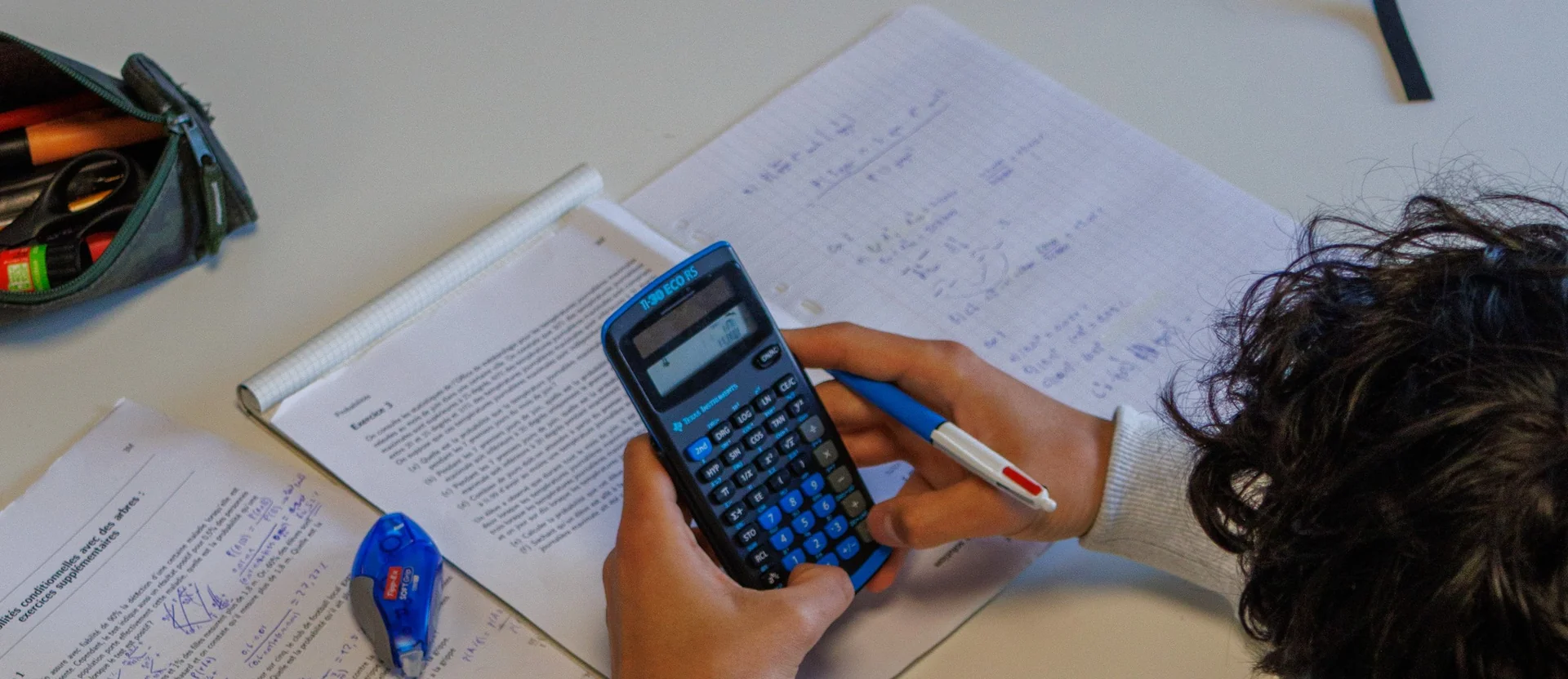
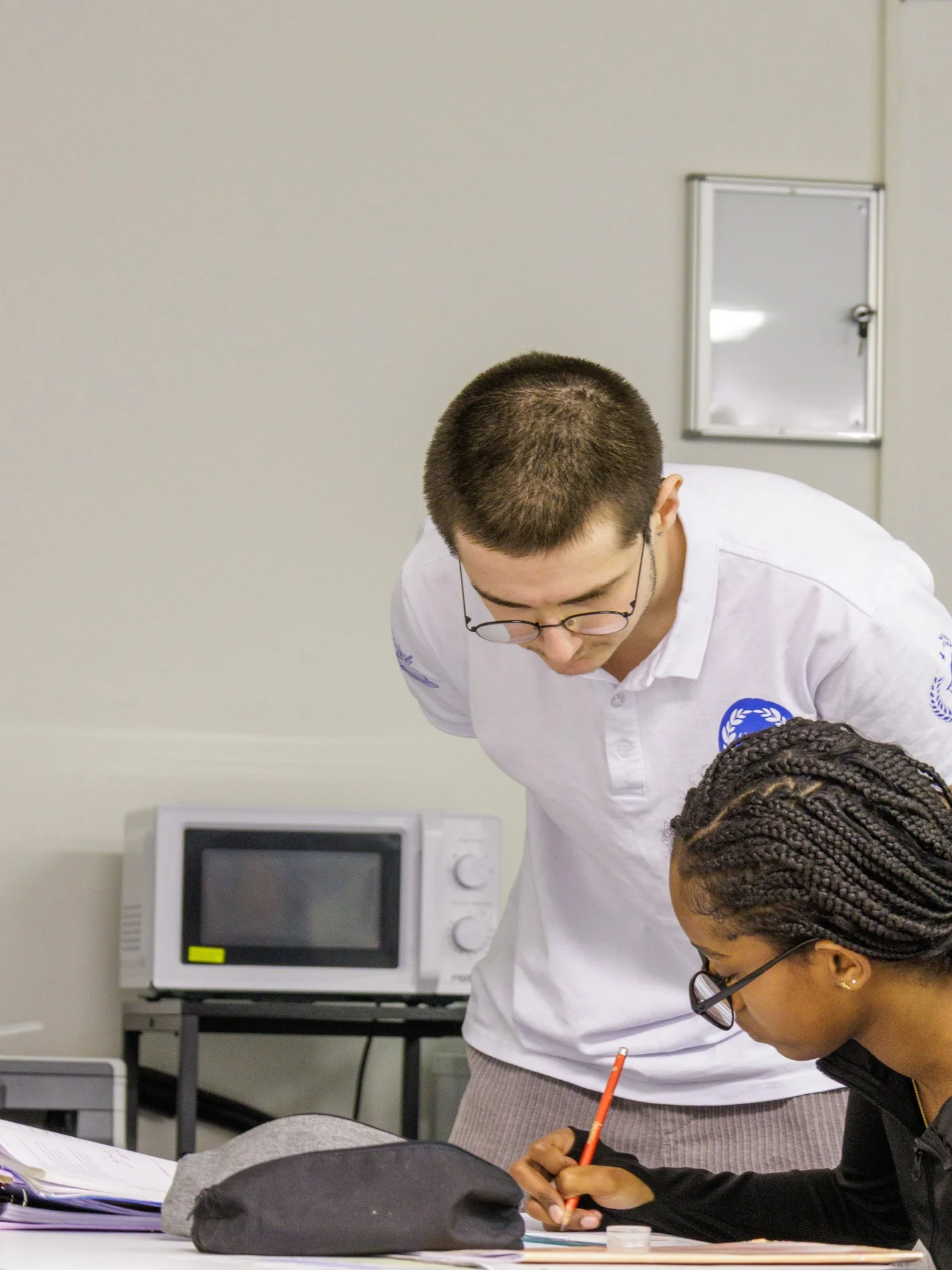
The ECR are worked on all year, particularly French, mathematics and German: regularity weighs more than last-minute revision. · Photo : Soutien-Omni-Scolaire
Every year, the same worry returns in Vaud families as the deadline approaches: 'how do we prepare for the ECR?'. The short answer fits in one sentence, and it is a relief: the ECR are not prepared the night before, they are prepared all year. These are tests that measure what has been built over time, not what can be recited on an April morning.
This article is a concrete guide: what the ECR are, in which years and subjects they fall, what they actually assess, and above all how to practise effectively, year by year, without turning the preceding weeks into a nightmare. If you first want to understand what these tests are for, we devoted another article to that; this one focuses on preparation.
In a hurry? The essentials in six points
- 1The ECR take place in 4P (French), 6P (French and mathematics) and 8P (French, mathematics and German). The exact dates are set by the canton and communicated in advance.
- 2They measure knowledge settled over time: steady work through the year counts far more than intensive last-minute revision.
- 3Practising on properly formatted tests is decisive: knowing the type of questions and the pace removes half the stress on the day.
- 4French is the cross-cutting subject: reading comprehension and writing must be worked on early, as they cannot be caught up in a few days.
- 5The real risk is not the test itself, it is the stress born of the unknown: preparation reduces it by making the test familiar.
- 6Starting early, from autumn, leaves time to settle knowledge deeply. The free educational assessment establishes exactly where your child stands.
The ECR in brief: when and what
The Cantonal Reference Tests (ECR) are assessments that Vaud students take at three points in their schooling. In the 4th year (4P) they cover French. In the 6th year (6P), French and mathematics. In the 8th year (8P), French, mathematics and German. They take place each year around late April or early May; the precise dates are set by the canton and communicated in advance by the school.
An important point to keep in mind: the ECR are not an entrance exam or a guillotine. They are reference points, for the student, the teacher and the canton. Saying this to your child, calmly, already lowers the pressure: the stakes are real, but it is not a wall.
The principle that changes everything: regularity beats intensity
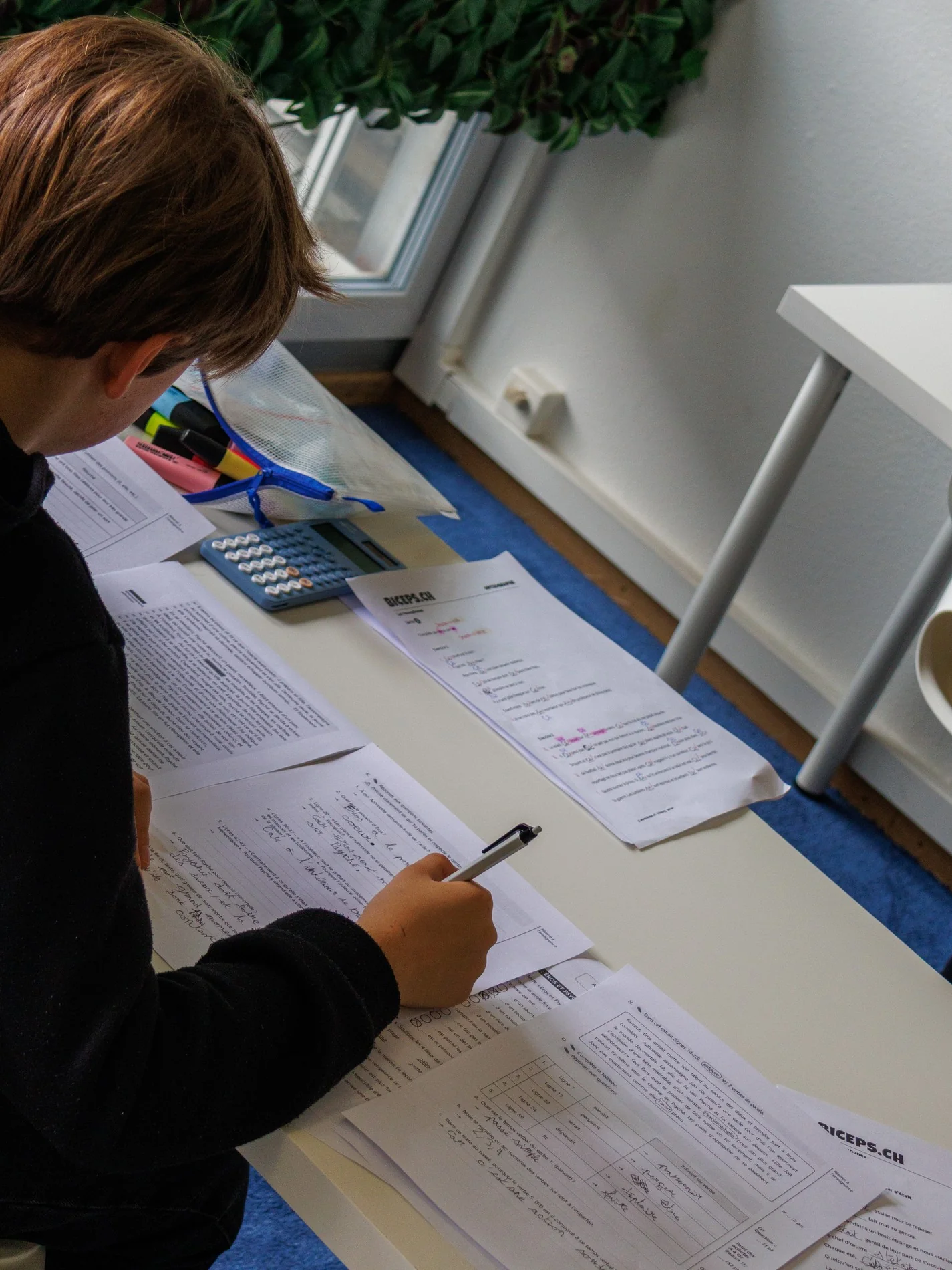
It is the most useful thing we can tell you, and it is confirmed every year in our centres: the ECR reward steady work, not cramming. The reason is simple. These tests measure skills that build slowly, understanding a text, mastering operations, a language's vocabulary. Those skills are not manufactured in three revision evenings; they settle, week after week.
Concretely, this means that a small regular dose, a few well-chosen exercises each week from autumn on, produces a far better result than intensive revision in spring. And it also means it is almost always too early to start, and almost never too late to begin: the earlier you start, the lighter and more effective the preparation.
Practise in the right format: half the stress gone
A student who discovers a test's format on the day loses energy working out what is expected, before even answering. A student who has practised on tests of the same type knows what to expect: the kind of questions, the time available, how to present their answers. That familiarity removes a huge share of the stress, and stress is performance's first enemy.
That is why practising on properly formatted tests is at the heart of our preparation: exercises at the level and style of the ECR, done in conditions close to the test, then corrected in detail to understand not only the right answer, but the method that leads to it. Practising without correction repeats mistakes; practising with correction erases them one by one.
Year by year: what matters most
4P: French, and above all reading
In the 4th year, everything hinges on French, and the heart of French at this age is reading comprehension. A child who reads regularly, who is asked to retell what they read, who learns to locate information in a text, builds exactly the skill assessed. It is also the year when basic spelling and conjugation must become reflexes. The good news: at this age, practice can stay light and regular, a few well-used minutes beat long sessions.
6P: French and mathematics
In the 6th year, mathematics joins French. In maths, the ECR call on operations, fractions and problems: concepts that chain together, where a fragile base costs marks everywhere else. It is the ideal year to spot and close a gap before it settles. In French, writing gains importance alongside comprehension: structuring a text is not innate, it is learned and corrected.
8P: French, mathematics and German
In the 8th year, German is added, and it is often the one that worries most. German vocabulary and grammar need spread-out preparation: it is impossible to catch up years of vocabulary in a few weeks. In maths, literal calculation and the first more abstract concepts raise the level. And French remains cross-cutting. The 8P is also a year when orientation is decided in parallel: all the more reason to approach the ECR with method rather than in a panic.
ECR stress, and how to defuse it
Many children stress about the ECR, and that stress feeds on one thing: the unknown. You do not stress about what you master and have already done; you stress about what you have never seen. That is why preparation is the best anti-stress there is: every mock test turns a little unknown into familiar ground. Repeating 'don't stress' is useless; having them do a practice test calmly is not.
The parents' role here is precious and simple: take the drama out, remind them the ECR are a reference and not a guillotine, guarantee a steady, calm working framework, and avoid passing on your own worry. The teaching demands, meanwhile, can be delegated: that is a teacher's job, not that of a parent redoing the programme every evening.
How we prepare for the ECR at SOS
Our preparation follows exactly the logic of this article. It starts with a free educational assessment that establishes the child's real level in the subjects concerned and spots the concepts to consolidate. The programme then spreads across the year, at an adapted pace: steady work on the assessed skills, practice on ECR-format exercises, and mock exams to reach the day on familiar ground. Every teacher passed a teaching test before their first lesson, and you receive a report after every session, to follow the progress with no bad surprises.
Preparation happens in the format that fits: one-to-one when a precise gap needs tailored work, semi-private or supervised study for steady supervised practice, in our Vevey, Lausanne and Montreux centres, at home or online. In 2025-2026, 95% of our students followed across the year passed their school year.
In practice, two paths lead to successful ECR, and they combine. The first, the most effective, is steady work all year: supervised study or regular lessons, so that knowledge settles smoothly. The second, precious as the deadline nears, is our intensive holiday camps, especially at Easter, just before the tests: a few concentrated days to revise the key points, practise on mock papers and arrive calm. The initial assessment says which of the two, or which first, fits your child.
Remember the essential: the ECR reward neither luck nor cramming, but regularity and practice in the right format. Starting early means a light preparation and real calm on the day of the test. The first step takes two minutes: the free educational assessment, to know precisely where your child stands and where to begin.
| Year group | Subject | 2027 dates |
|---|---|---|
| 8P | French | Tuesday 27 April |
| 8P | Maths | Wednesday 28 April |
| 8P | German | Thursday 29 April |
| 6P | French | Thursday 29 and Friday 30 April |
| 6P | Maths | Monday 3 and Tuesday 4 May |
| 4P | French | 29, 30 April, 3 and 4 May |
Going further
- Calculate your child's orientation and promotion
- 8P ECR: the half-point that decides orientation
- Our mock exams under real conditions
- Our ECR preparation
- Intensive holiday camps (Easter, before the ECR)
- Supervised study: steady practice all year
- One-to-one lessons: closing a targeted gap
- Request the free educational assessment (2 minutes)
Our centres
A teacher near you
- Tutoring in VeveyPassage Saint-Antoine 7, 1800 VeveyRight next to Vevey station (trains and regional buses)See the centre
- Tutoring in LausanneRue Saint-Martin 9, 1003 Lausanne2 minutes from the Bessières metro stopSee the centre
- Tutoring in MontreuxAvenue des Alpes 27B, 1820 MontreuxA few minutes’ walk from Montreux stationSee the centre
What actually changes
A specialist for each subject
Not a generalist covering everything: a teacher whose discipline it is, chosen after the assessment.
Every branch covered
Maths, French, German, English, sciences, economics and accounting, from primary school to the maturité.
Progress measured, not assumed
Every session is measured against the real Vaud thresholds: promotion points, levels, ECR, certificate.
A written report after every session
You know what was covered, what is secure and what still needs work. Without having to ask.
Soutien-Omni-Scolaire
Difficulties that persist?
A teacher who specialises in their subject, across every branch: maths, French, German, English, sciences, economics and accounting. From primary school to gymnasium, in centre, at home or online.
First conversation, no commitment
Parents' frequently asked questions
How do you prepare for the ECR effectively?
Through steady work across the whole year rather than last-minute cramming, and through practice on ECR-format exercises corrected in detail. The ECR measure skills that build over time: starting in autumn makes the preparation light and far more effective. The free educational assessment shows where to begin, based on your child's real level.
In which years and subjects are the ECR taken in the canton of Vaud?
In 4P (French), 6P (French and mathematics) and 8P (French, mathematics and German). They take place each year around late April or early May; the exact dates are set by the canton and communicated in advance by the school.
Do you need examples or past papers to prepare for the ECR?
Practising on tests of the same format as the ECR is very useful: it familiarises the student with the type of questions and the pace, which strongly reduces stress on the day. The point is not only to do the exercise, but to correct it in detail to understand the method. That is exactly what our preparation offers, with mock exams.
How can I help my child manage ECR stress?
Stress comes mostly from the unknown: the more familiar the test becomes through practice, the more it fades. Your role is to take the drama out (the ECR are a reference, not a guillotine), to guarantee a calm, steady working framework, and to avoid passing on your own worry. Doing a mock test calmly reassures far more than repeating 'don't stress'.
When should ECR preparation start?
As early as possible, ideally from autumn. The assessed skills build slowly: the earlier you start, the lighter the preparation and the deeper it settles. It is, however, never really too late to begin, and an initial assessment shows how much time to set aside for the situation.
Where does SOS prepare for the ECR?
In our Vevey, Lausanne and Montreux centres, as well as at home and online, one-to-one, semi-private or in supervised study depending on the need. Everything starts with a free educational assessment that establishes the level and builds the adapted programme.
The SOS teaching team
Tutoring · Canton of Vaud
A teaching team specialised in the Vaud school system: ECR preparation, VP and VG orientation, raccordement, gymnase entry and maturité. Centres in Vevey, Lausanne and Montreux.
Meet the SOS team →