Advice for Parents · 25 August 2026
Risk of repeating the year: decide with method, act in time
The word is frightening, and it rarely comes at a good moment: 'your child risks repeating the year'. Two very different situations hide behind it, the risk announced mid-year, and the decision already made. In both cases research says the same thing: repeating repairs nothing by itself. What repairs is what you change around it. Here is how to decide with method, and act in time.
 By The SOS teaching team8 min readReviewed by the teaching team
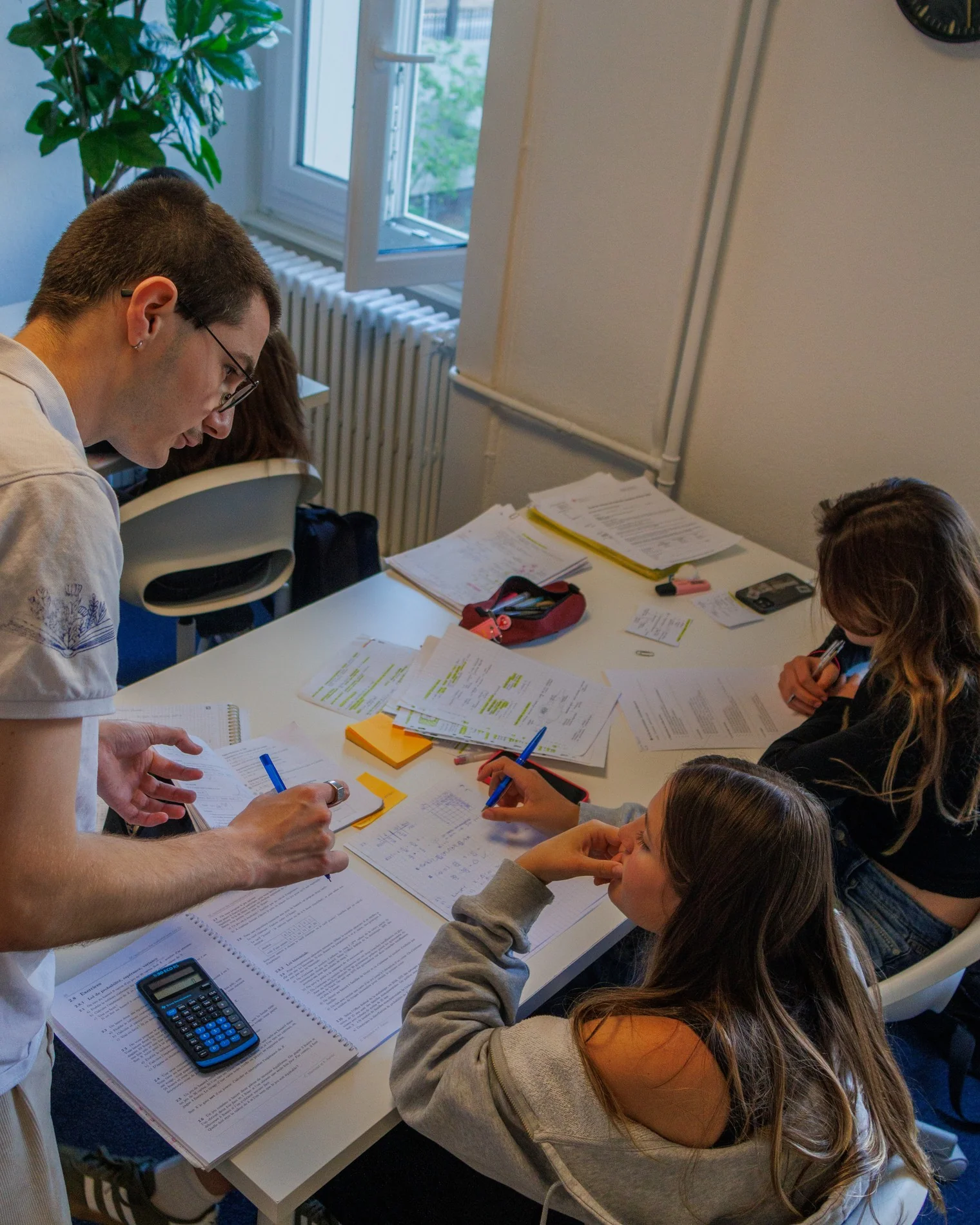
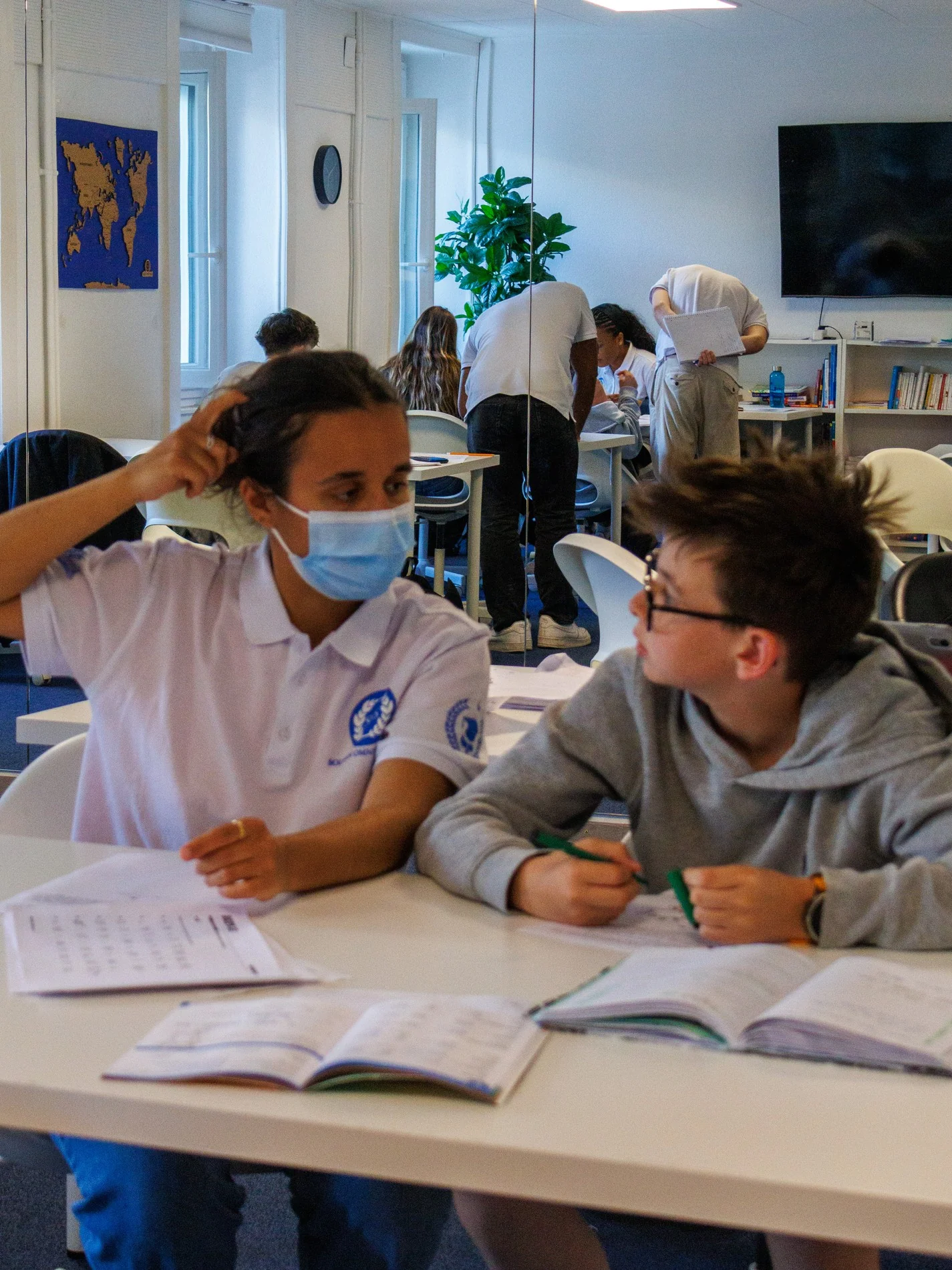
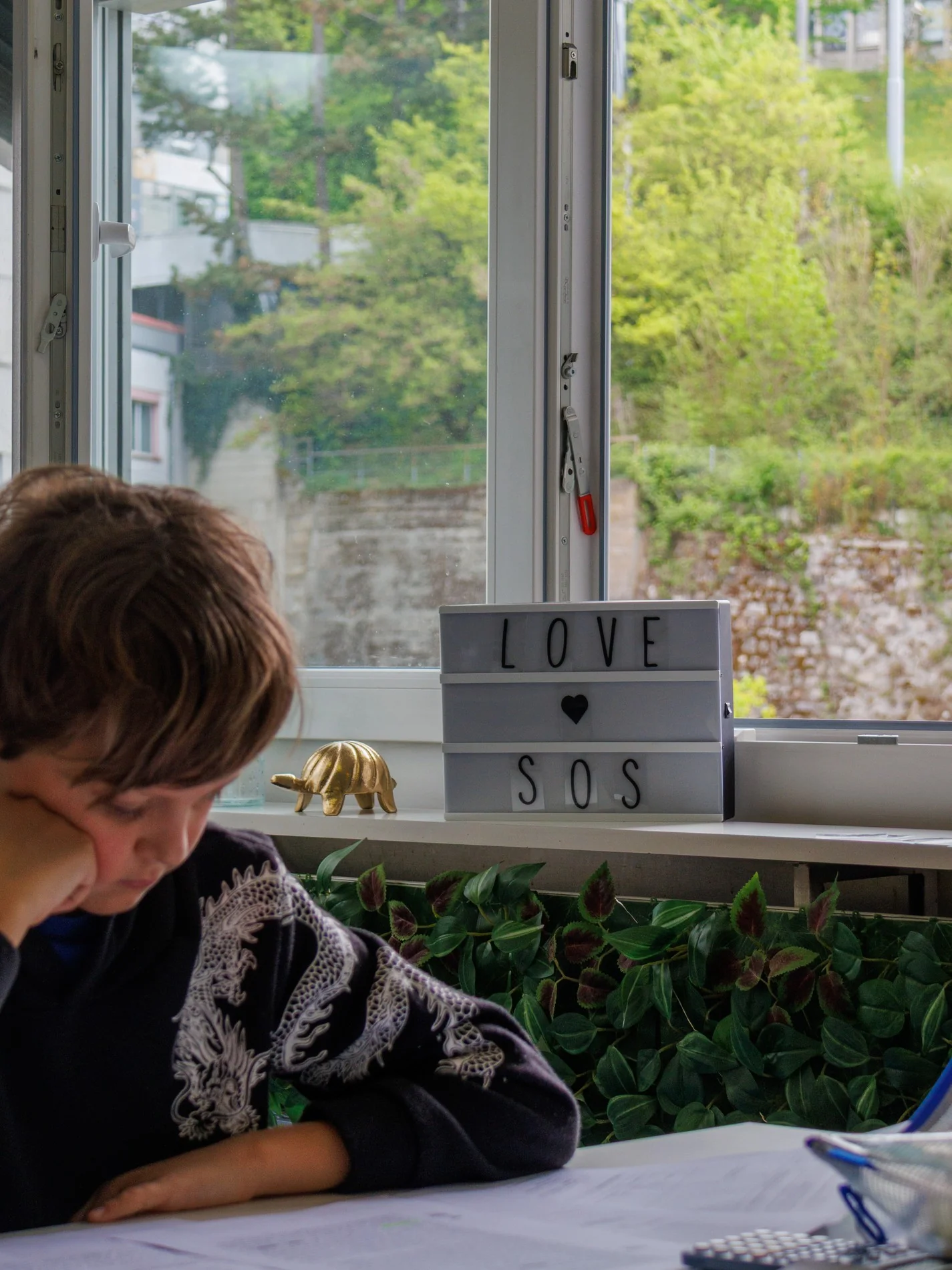
A repeat-year risk plays out months before the decision: the room for manoeuvre exists during the year. · Photo : Soutien-Omni-Scolaire
Few school words are as frightening as this one. And yet 'repeating the year' covers two situations that call for very different responses. The first: the risk is announced mid-year, and there is still time. The second: the decision is made, and the question becomes how to make that year a useful one. This article covers both, with one thread that research imposes: redoing the same year the same way repairs nothing.
In a hurry? The essentials in five points
- 1Research syntheses, notably John Hattie's, rank grade retention among the few measures with a negative average effect: repeating the year without changing the support replays the problem instead of treating it.
- 2A risk announced mid-year is a disguised opportunity: months remain to act, and the decisive subjects can be identified.
- 3The exact promotion conditions are set by the cantonal assessment framework: ask the school precisely what is missing, in points and in subjects.
- 4A decided repeat year only becomes useful if it serves to close the real gaps, not to passively sit through the same lessons again.
- 5In both cases the first step is a diagnosis: which concepts are missing, in which subjects, since when. That is what our free assessment is for.
What research says about retention
It is one of the most counter-intuitive results in education research: repeating a year, by itself, rarely helps. The major international syntheses, including John Hattie's aggregation of hundreds of meta-analyses, rank it among the few school interventions with a negative average effect. The reason is logical: if a student failed because concepts are missing, having them sit through the same lessons, at the same pace, with the same methods, does not fill those concepts. And the cost is real: a year, separation from their cohort, and a hard message about themselves to carry.
Should we conclude that repeating is always wrong? No. We should conclude that repeating is never a solution in itself: it is extra time, worth only what is done with it. A repeat year accompanied by real work on the original gaps can succeed; a bare repeat replays the year. The whole decision lies there.
If the risk is announced mid-year
A risk announced in November, January or March is a disguised opportunity: time remains, and the problem now has a name. The effective approach has three steps. First, get the precise picture from the school: which subjects endanger the year, by exactly how much, which tests remain. Promotion conditions are set by the cantonal assessment framework, and the school can tell you precisely what is missing. Second, have the origin of the difficulties diagnosed in those decisive subjects: a gap of a few points in maths can come from one precise concept, recoverable in a few weeks of targeted work. Third, concentrate the effort where it counts: lifting two decisive subjects strongly beats sprinkling effort everywhere.
If the repeat year is decided
Once the decision is made, the worst scenario is the passive repeat: the student sits through lessons they half know, gets bored in the subjects they were comfortable in, and still has not closed the gaps that caused the failure. The good scenario reverses the logic: use the lighter load in mastered subjects to finally treat, in depth, the original concepts in the subjects that cost the year. It is the only way to turn a repeated year into a won year.
There is also a piece of work that is not academic: confidence. Repeating is a hard message to carry, especially as classmates move up. The people around count double that year: a stable framework, progress made visible, and adults who treat the year as a project, not a punishment. We devoted a whole article to confidence and motivation; it applies here word for word.
The questions to ask the school
- Which subjects, precisely, endanger the year, and by how much?
- Which tests remain before the decision, and how much do they weigh?
- What are the exact promotion conditions for my child's track and year?
- What can the school offer (support measures), and what falls to us?
- If the repeat happens: what will be different next year, so the year is not replayed identically?
How we help at SOS
Our role starts with the diagnosis: the free educational assessment establishes the real level in the decisive subjects, identifies the original concepts and measures what is recoverable in the time remaining. Then the programme is cut to the decision at stake: one-to-one or semi-private lessons focused on the subjects that count, supervised study to hold the working framework, mock exams to reach the tests on familiar ground. Teachers are tested before their first lesson, followed by teaching supervisors, and you receive a report after every session: in a year where every test counts, you always know where your child stands.
A repeat-year risk is not a verdict, it is a countdown: as long as the year is not over, it can be played. And a decided repeat is not an end, it is time, worth exactly what is made of it. In both cases the first step is the same and takes two minutes: request the assessment.
Going further
Our centres
A teacher near you
- Tutoring in VeveyPassage Saint-Antoine 7, 1800 VeveyRight next to Vevey station (trains and regional buses)See the centre
- Tutoring in LausanneRue Saint-Martin 9, 1003 Lausanne2 minutes from the Bessières metro stopSee the centre
- Tutoring in MontreuxAvenue des Alpes 27B, 1820 MontreuxA few minutes’ walk from Montreux stationSee the centre
What actually changes
A specialist for each subject
Not a generalist covering everything: a teacher whose discipline it is, chosen after the assessment.
Every branch covered
Maths, French, German, English, sciences, economics and accounting, from primary school to the maturité.
Progress measured, not assumed
Every session is measured against the real Vaud thresholds: promotion points, levels, ECR, certificate.
A written report after every session
You know what was covered, what is secure and what still needs work. Without having to ask.
Soutien-Omni-Scolaire
Difficulties that persist?
A teacher who specialises in their subject, across every branch: maths, French, German, English, sciences, economics and accounting. From primary school to gymnasium, in centre, at home or online.
First conversation, no commitment
Parents' frequently asked questions
A repeat-year risk has been announced: what first?
Get the precise picture from the school: which subjects endanger the year, by how much, and which tests remain. Then have the origin of the difficulties diagnosed in those decisive subjects: that is what separates a gap recoverable in a few weeks from a deep backlog. The free educational assessment does this diagnosis, and time is on your side while the year is not over.
My child is repeating the year: how do I help?
By refusing the passive repeat. The year only becomes useful if it serves to close the original gaps in the subjects that cost the year, while the load is lighter elsewhere. And by working on confidence as much as on schoolwork: a stable framework, visible progress, adults treating the year as a project. Without that, the year replays identically.
Does repeating a year work?
By itself, rarely: research syntheses, including John Hattie's, rank it among the few measures with a negative average effect, because sitting through the same lessons again does not fill missing concepts. It can succeed, however, when it comes with real work on the original gaps. A repeat year is time: it is worth what is done with it.
Can a repeat announced mid-year still be avoided?
Often, yes, and that is precisely why the school warns you: tests remain, so points remain to be taken. The key is concentrating the effort on the decisive subjects rather than sprinkling it, after a diagnosis of what is recoverable in the remaining time. The earlier the warning is taken seriously, the more real the margins.
Who decides on repeating, and by what rules?
Promotion conditions are set by the cantonal assessment framework, and the school pronounces the decision according to those rules. The most useful thing for you is to ask precisely what is missing, in points and in subjects, for your child's track and year: the school can tell you, and it is the basis of any serious action plan.
How does SOS support a high-stakes year?
With a diagnosis first (the free assessment), then a programme concentrated on the decisive subjects: one-to-one or semi-private lessons, supervised study for the framework, mock exams to reach the tests on familiar ground. You receive a report after every session, which counts double in a year where every test weighs.
The SOS teaching team
Tutoring · Canton of Vaud
A teaching team specialised in the Vaud school system: ECR preparation, VP and VG orientation, raccordement, gymnase entry and maturité. Centres in Vevey, Lausanne and Montreux.
Meet the SOS team →