Advice for Parents · 25 August 2026
Confidence and motivation at school: what can be rebuilt, and how
'He doesn't like school any more.' 'She stresses over every test.' 'I can't motivate him without a fight.' These three sentences rarely describe a character problem: they describe a circle in which results, confidence and desire pull each other down. The good news is that the circle also turns the other way, and we know where to grab it.
 By The SOS teaching team9 min readReviewed by the teaching team
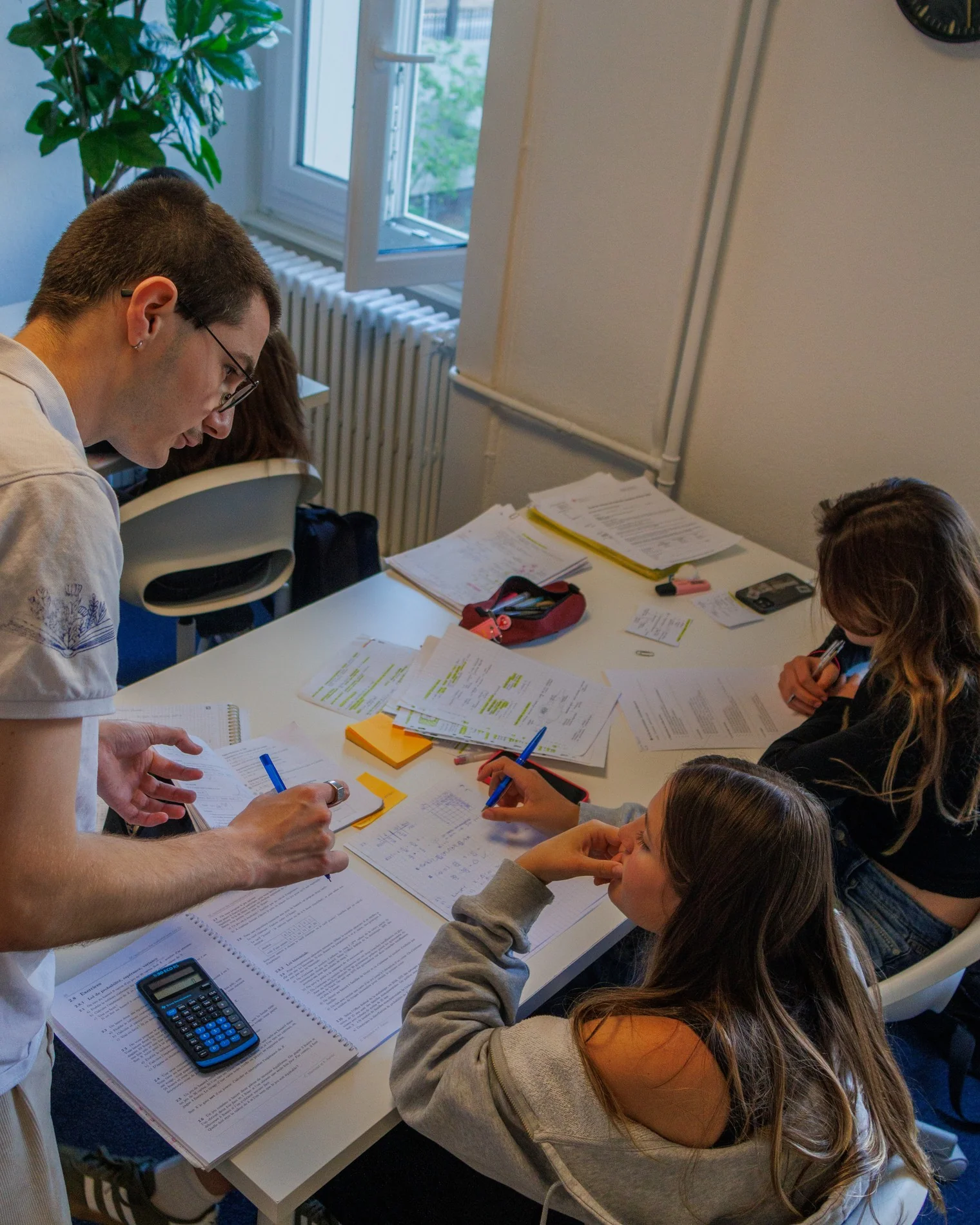
Motivation cannot be decreed: it returns when a student feels they are progressing, choosing, and believed in. · Photo : Soutien-Omni-Scolaire
'Motivate yourself.' If that command worked, no parent would be reading this article. School motivation cannot be decreed, by the child or by the parents: it is rebuilt, through precise conditions that research knows well and that field experience confirms every week. This article sorts out what truly helps a demotivated, stressed or confidence-shaken student, and what, with the best intentions in the world, makes things worse.
In a hurry? The essentials in six points
- 1Motivation rests on three well-documented needs: feeling capable of progressing, having a share of choice, and feeling supported rather than judged.
- 2Confidence follows results more than it precedes them: the most reliable lever is a measurable improvement, however small, achieved quickly on one precise point.
- 3School stress is a signal, not a whim: it is treated by reducing uncertainty (preparation, method), not by repeating 'don't stress'.
- 4Punishments and reward bargaining work for a few days, then wear out the relationship and motivation itself.
- 5Helping without arguing means changing roles: guarantee the framework and conditions, entrust the teaching demands to someone else.
- 6If demotivation hides learning gaps, no speech will be enough: a diagnosis comes first. That is what our free assessment is for.
What research says about motivation
The reference work on motivation, notably by psychologists Edward Deci and Richard Ryan, converges on a simple finding: a student stays motivated when three needs are fed. Competence first: feeling that you are progressing and can succeed. Autonomy next: having a share of choice in when and how you work, rather than enduring everything. Relatedness finally: feeling supported by adults rather than judged by them. The same research shows the limit of systematic rewards: paying or rewarding every effort can, over time, weaken the desire to make the effort for its own sake.
Translated into family life: a demotivated child almost never has a willpower problem. One of the three reservoirs is dry, most often the first: they no longer feel capable. That is why demotivation so often follows, a few months later, difficulties in one or two subjects.
The circle of marks, confidence and desire
The mechanism is almost mechanical. Difficulties appear in a subject; marks slip; the student concludes something about themselves; they avoid the subject, work less, participate less; marks slip further. From the outside you only see the last step, demotivation, and you try to treat it with words. But the effective entry point into the circle is not desire: it is competence. A real, measurable improvement, achieved quickly on one precise point, does more for motivation than any encouragement. That principle guides our assessments: find the exact spot where quick progress is possible, and start there.

School stress, a signal to hear
A child stressed by school is not a fragile child: they are facing tests they do not feel in command of. Stress feeds on uncertainty, so it is treated by whatever reduces it: knowing precisely what will be asked, having practised in conditions close to the test, having a method to get started when you do not know. That is exactly what mock exams and steady work do: they turn the unknown into familiar ground. Repeating 'don't stress' reduces no uncertainty; a prepared test does.
One important word: if the stress goes well beyond school, with lastingly disturbed sleep, withdrawal, or settling sadness, speak to your paediatrician or a health professional. Tutoring improves the school part of the problem; it does not replace healthcare support when that is needed.
Helping without arguing
Many evening arguments share one origin: the parent holds three roles at once, enforcer of the framework, teacher of the concepts and judge of the results. No relationship withstands that combination for long. The soothing division is almost always the same: the parent keeps the framework role, a fixed time, a calm place, the phone in another room, and leaves the teaching demands to someone else, the school, a teacher, a centre. It is not giving up: it is what lets you become again the parent who encourages, rather than the one who controls.
- Replace 'what mark did you get?' with 'what did you understand that's new?': the second question feeds competence, the first feeds fear of judgement.
- Give real choices within the framework: homework time, subject order, when to take the break. Autonomy feeds on small real choices.
- Highlight precise progress rather than general qualities: 'your essay is better built than the last one' carries further than 'you are clever'.
- Avoid reward bargaining as a system: an occasional celebration is a joy, a price per mark turns school into a transaction.
- Protect school-free time in the relationship: if every exchange is about marks, school has invaded the bond, and the bond is precisely one of the three reservoirs.
What we do at SOS
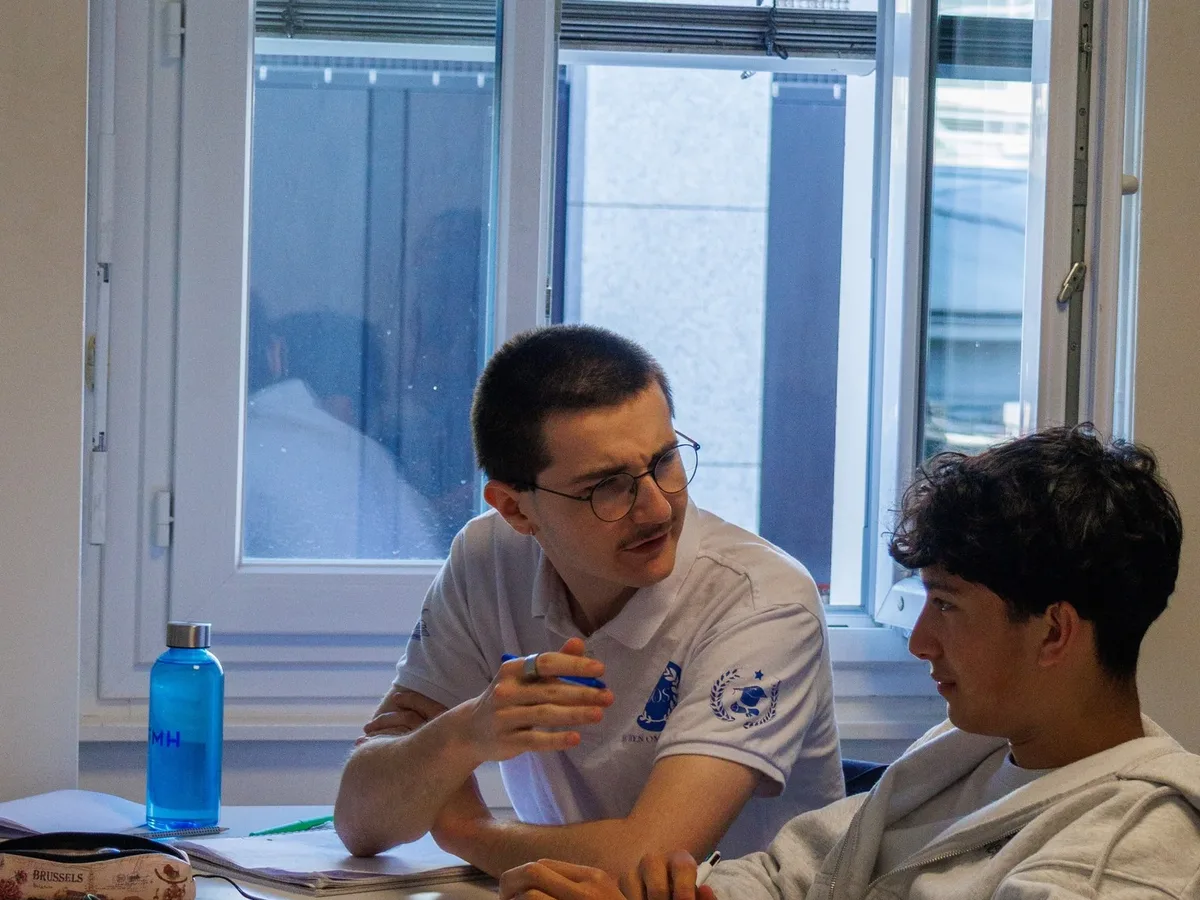
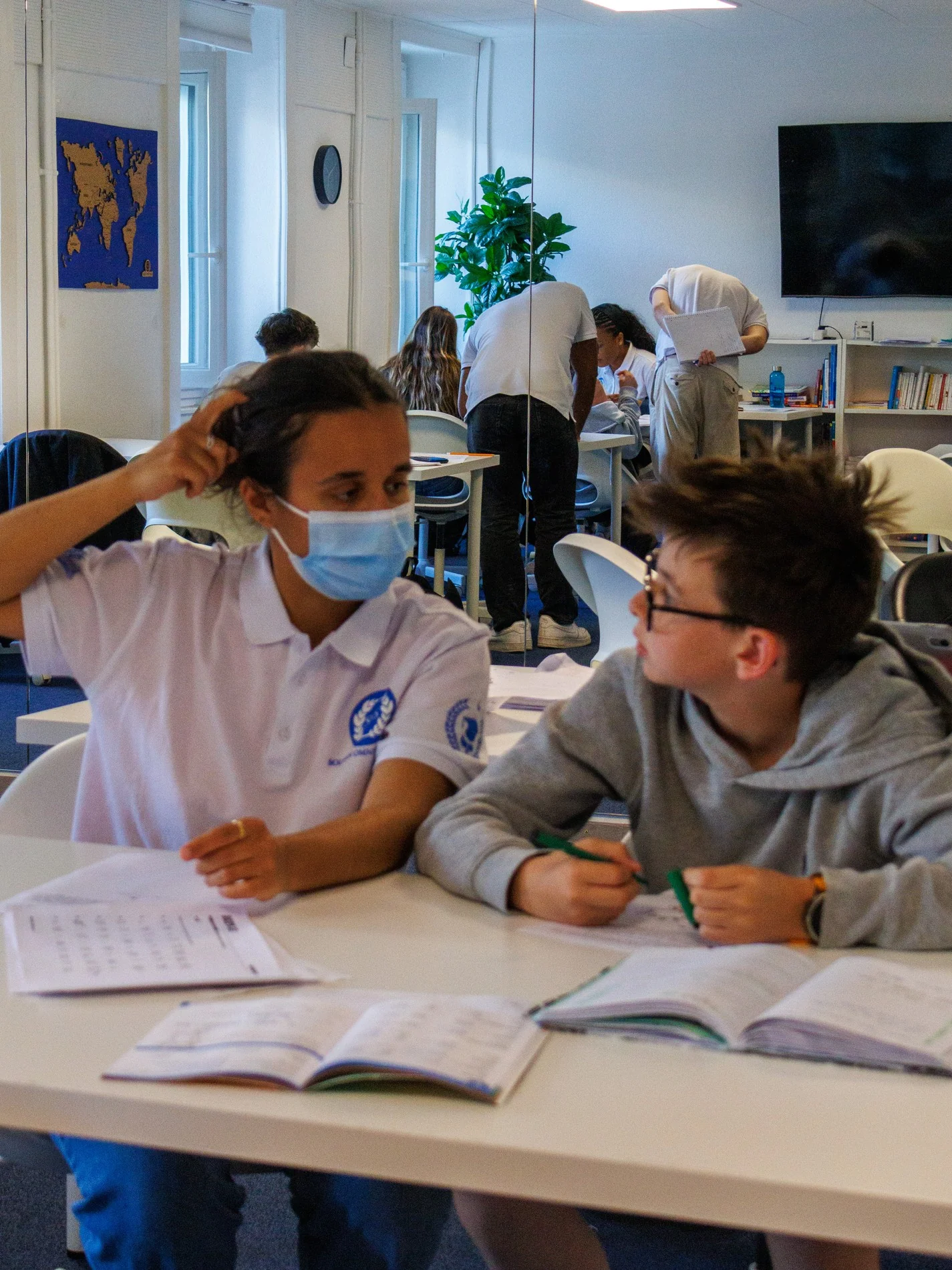
Our work on motivation does not go through speeches: it goes through the mechanism described in this article. The free educational assessment first identifies whether the demotivation hides learning gaps, and where quick progress is possible. The teacher, chosen for the student's profile and tested before their first lesson, sets short, reachable goals, and the report sent after every session makes progress visible, for the student and for you. Parents get their role back, the teacher carries the demands, and the student gets back the only thing that motivates durably: repeated proof that they can do it.
Your child's motivation has not disappeared: it is waiting for conditions to return. A stable framework, quick progress on one precise point, adults who support without judging. The first step takes two minutes: the free educational assessment, at the centre, at home or online.
Going further
Our centres
A teacher near you
- Tutoring in VeveyPassage Saint-Antoine 7, 1800 VeveyRight next to Vevey station (trains and regional buses)See the centre
- Tutoring in LausanneRue Saint-Martin 9, 1003 Lausanne2 minutes from the Bessières metro stopSee the centre
- Tutoring in MontreuxAvenue des Alpes 27B, 1820 MontreuxA few minutes’ walk from Montreux stationSee the centre
What actually changes
A specialist for each subject
Not a generalist covering everything: a teacher whose discipline it is, chosen after the assessment.
Every branch covered
Maths, French, German, English, sciences, economics and accounting, from primary school to the maturité.
Progress measured, not assumed
Every session is measured against the real Vaud thresholds: promotion points, levels, ECR, certificate.
A written report after every session
You know what was covered, what is secure and what still needs work. Without having to ask.
Soutien-Omni-Scolaire
Difficulties that persist?
A teacher who specialises in their subject, across every branch: maths, French, German, English, sciences, economics and accounting. From primary school to gymnasium, in centre, at home or online.
First conversation, no commitment
Parents' frequently asked questions
My child is losing confidence at school: where do I start?
With competence, not with speeches: confidence returns when the student sees they are progressing. Identify, with the school or through an assessment, the precise point where quick progress is possible, and start there. One measurable improvement, early, changes how a child sees themselves more than weeks of encouragement.
My child is stressed by school: how can I help?
By reducing uncertainty, which is stress's fuel: knowing what will be asked, having practised in conditions close to the test, having a method to get started. Mock exams and steady work do exactly that. And if the stress goes beyond school (sleep, withdrawal, lasting sadness), speak to your paediatrician: tutoring does not replace healthcare support.
How do I motivate my child to work?
By feeding the three needs motivation depends on: competence (short, reachable goals, visible progress), autonomy (real small choices: the time, the order of subjects), and relatedness (supporting without judging). Commands and reward bargaining do the opposite: they work for a few days and then wear out the relationship.
My child doesn't like school: can that be fixed?
'Not liking school' is almost always the translation of something else: difficulties in one or two subjects, a feeling of failure, sometimes a relational problem in class. You do not treat the global symptom, you identify the precise cause, and that is exactly what an educational assessment does. When the cause is academic, it can be repaired; and the view of school changes with the results.
How do I help my child without arguing?
By stepping out of the triple role: keep the framework (fixed time, calm place, phone elsewhere), let go of the teacher and judge roles. It is the combination that creates the argument, not the helping. When the teaching demands are carried by someone else, you become again the parent who encourages, and the relationship stops being the homework battlefield.
Can demotivation hide learning gaps?
It is in fact the most frequent case: demotivation often follows, a few months later, difficulties settled in one or two subjects. The student no longer feels capable, so they no longer want to. In that case no speech is enough: the missing base must be rebuilt. The free assessment settles what is in play, the gaps or something else.
The SOS teaching team
Tutoring · Canton of Vaud
A teaching team specialised in the Vaud school system: ECR preparation, VP and VG orientation, raccordement, gymnase entry and maturité. Centres in Vevey, Lausanne and Montreux.
Meet the SOS team →