Advice for Parents · 25 August 2026
My child is falling behind in maths: understand the drop before fixing it
The drop always looks sudden: a 5 in autumn, a 3.5 a few months later, and a child repeating 'I'm useless at maths'. It almost never is sudden. In maths everything chains together, and one missing step is enough to make the whole floor unstable. Here is how to find that step, and why revising the current chapter harder repairs nothing.
 By The SOS teaching team9 min readReviewed by the teaching team
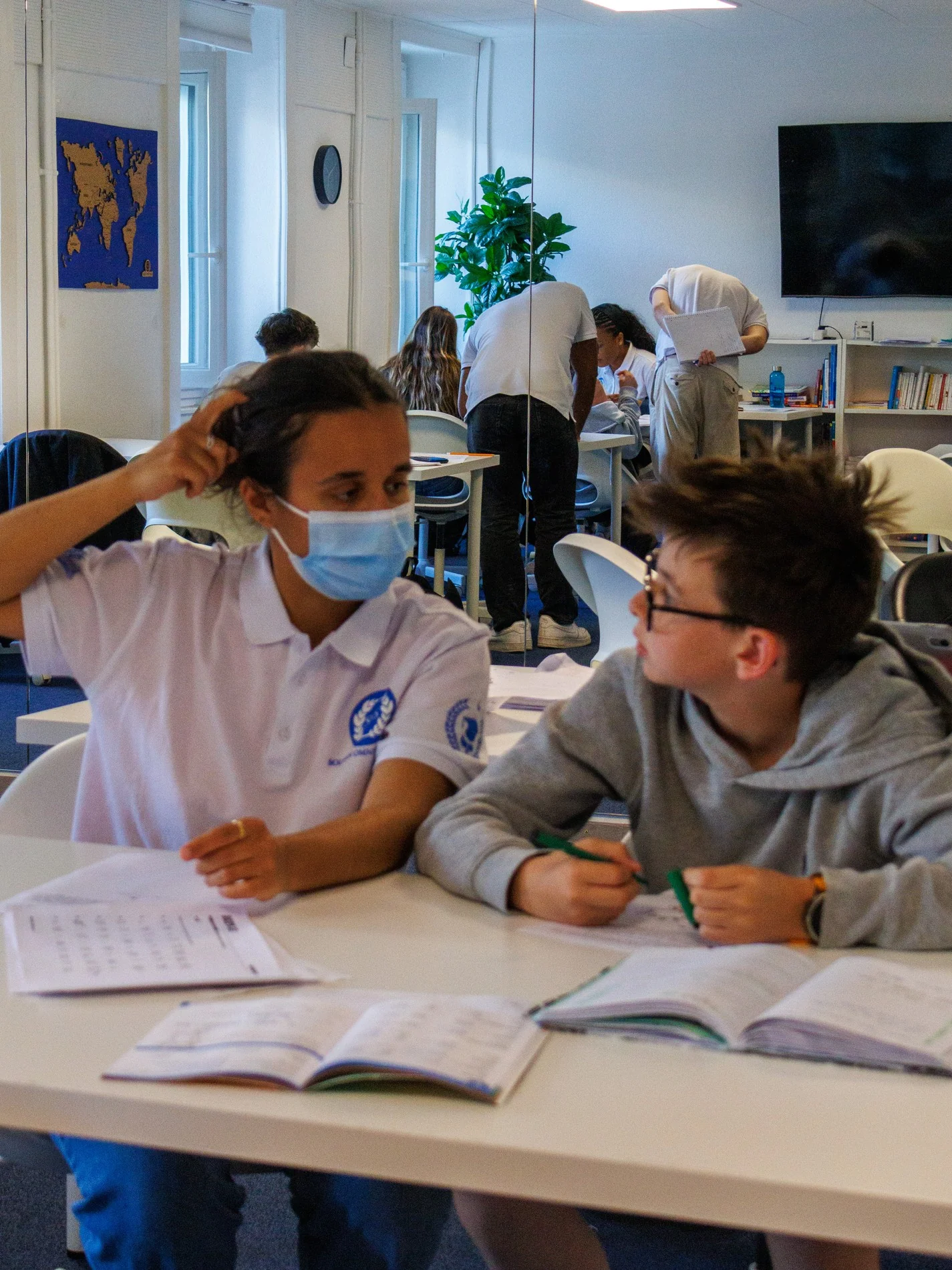
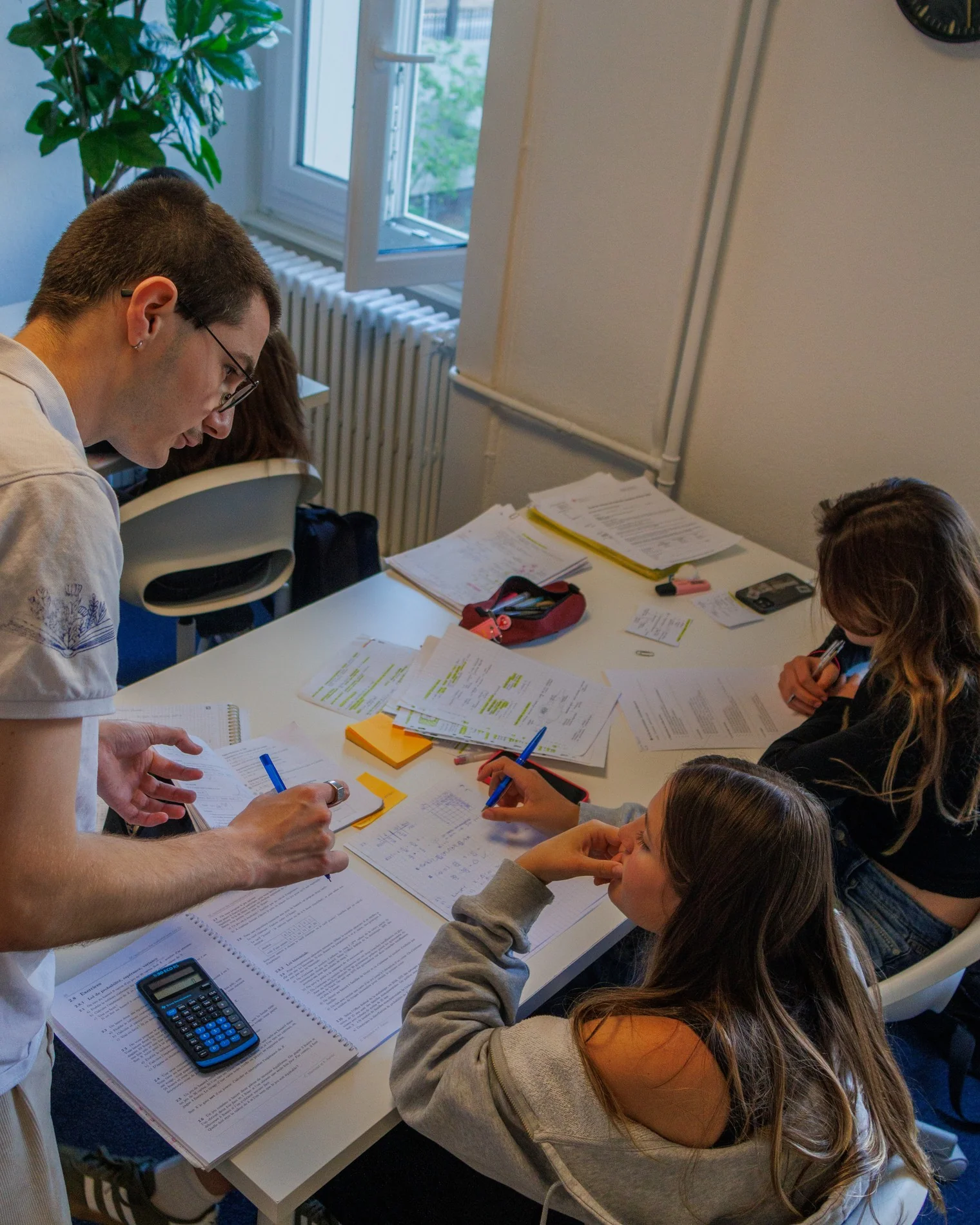
Show the method, then let the student redo it: in maths, the climb back always goes through the missing concept, not the current chapter. · Photo : Soutien-Omni-Scolaire
The scene is almost always the same. Maths marks were fine, then they slipped, then a test came back with a number that hurt. And the child has already drawn their conclusion: 'I'm useless at maths'. To parents, the drop looks sudden. It almost never is: in maths, the real block usually dates back months, sometimes a school year or two.
This article explains why maths drops in this very particular way, how to identify the concept that is actually missing, what you can do at home, and when support becomes the shortest path. It applies to maths first, but the logic also holds for French and every subject built floor by floor.
In a hurry? The essentials in six points
- 1In maths everything chains together: division prepares fractions, which prepare literal calculation, then equations and functions. One missing step makes the whole floor unstable.
- 2The drop in marks looks sudden, but the block almost always dates back months. A mark says a problem exists, never where it is.
- 3'I'm useless at maths' is not a diagnosis: it is the conclusion a student draws from their marks. It fades when results climb.
- 4Revising the current chapter harder repairs nothing if the base beneath it is missing. You have to go back up the chain to the missing concept.
- 5At home: take the drama out, keep sessions short, observe mistakes rather than counting them, and do not become your child's teacher.
- 6The earlier the diagnosis, the shorter the climb. That is exactly what our free educational assessment is for.
Why maths drops all at once
Maths is the most cumulative subject in the curriculum. Division prepares fractions, fractions prepare literal calculation, literal calculation prepares equations, which prepare functions. Each chapter rests on the previous one like a floor on the one below. As long as fragile concepts are rarely called upon, the student compensates: learning recipes by heart, copying methods, getting through tests. Then comes the chapter that truly demands the missing base, and everything gives way at once.
That is why the drop looks brutal when it is in fact old. And that is why the most common reaction, revising the current chapter harder, fails so often: you are reinforcing the top floor when a step below is missing. The student works more, does not progress, and draws a terrible conclusion about themselves.
'Useless at maths' does not exist
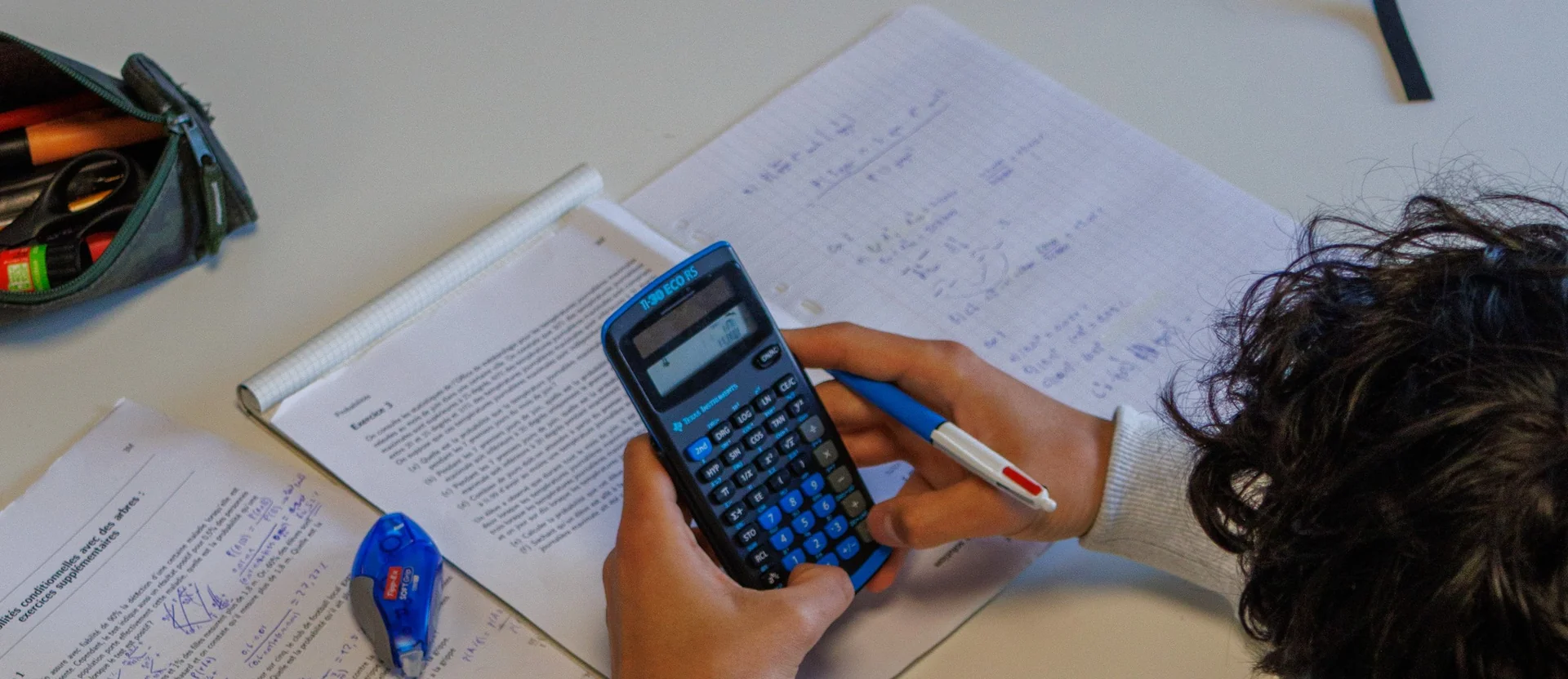
When a child says 'I'm useless at maths', they are not describing their abilities: they are summarising their latest marks. It is a conclusion, not a diagnosis. The danger is that it quickly becomes an identity: the student who believes they are useless avoids the subject, participates less, no longer dares to be wrong, and every avoidance widens the gap. Our experience in our centres is constant on this point: when the missing base is rebuilt and results climb, the story changes with them. Confidence in maths follows progress; it rarely precedes it.
Concretely, this means one important thing for you: there is no point convincing your child they 'can do it' while nothing changes in their results. The lever is not the speech, it is a measurable improvement, however small, achieved quickly on one precise point.
Finding the missing step
A good diagnosis is not made on marks but on mistakes. Take the latest tests and look at what repeats: elementary calculation errors in an equations chapter signal a foundations problem, not an equations problem. A student who sets out operations well but systematically stumbles on fractions is telling you exactly where to go back. A student who does not know how to start a problem has a method issue, not a concept issue.
It is professional work, for a simple reason: you need to know the curriculum's chain to know which step tests which other. That is precisely what our educational assessment does: establish the real level, identify the original concept, and build the path back up. Then the teacher rebuilds that concept and checks that what follows holds on top of it, up to the milestones that matter: school tests, ECR, Year 11 exams, gymnase admission.
What you can do at home
- Take the drama out, sincerely: a maths drop is a missing-concept problem, not an intelligence problem. Saying it, and above all believing it, changes the working climate.
- Prefer short, regular sessions to long catch-up evenings: in maths, twenty focused minutes beat an hour of tension.
- Observe mistakes rather than counting them: what repeats from one test to the next is your best information.
- Have failed exercises redone a few days later, without the corrected version at hand: it is the most honest test of what is truly acquired.
- Do not become your child's teacher: explaining once, yes; redoing the lesson every evening, no. The parent-child relationship is worth more than a maths chapter, and homework conflict deepens avoidance.
On that last point, we devoted a whole article to the homework battle and the routine that calms it. The two complement each other: the routine creates the conditions for the work, the diagnosis sets its content.
When and how to get help
The signals that justify not waiting: marks slipping across several tests in a row, a subject avoided or rushed, maths homework that drags on, a child who puts themselves down. Two or three together, settled over time, almost always indicate an original concept to rebuild, and the longer you wait, the more the chain above weakens.
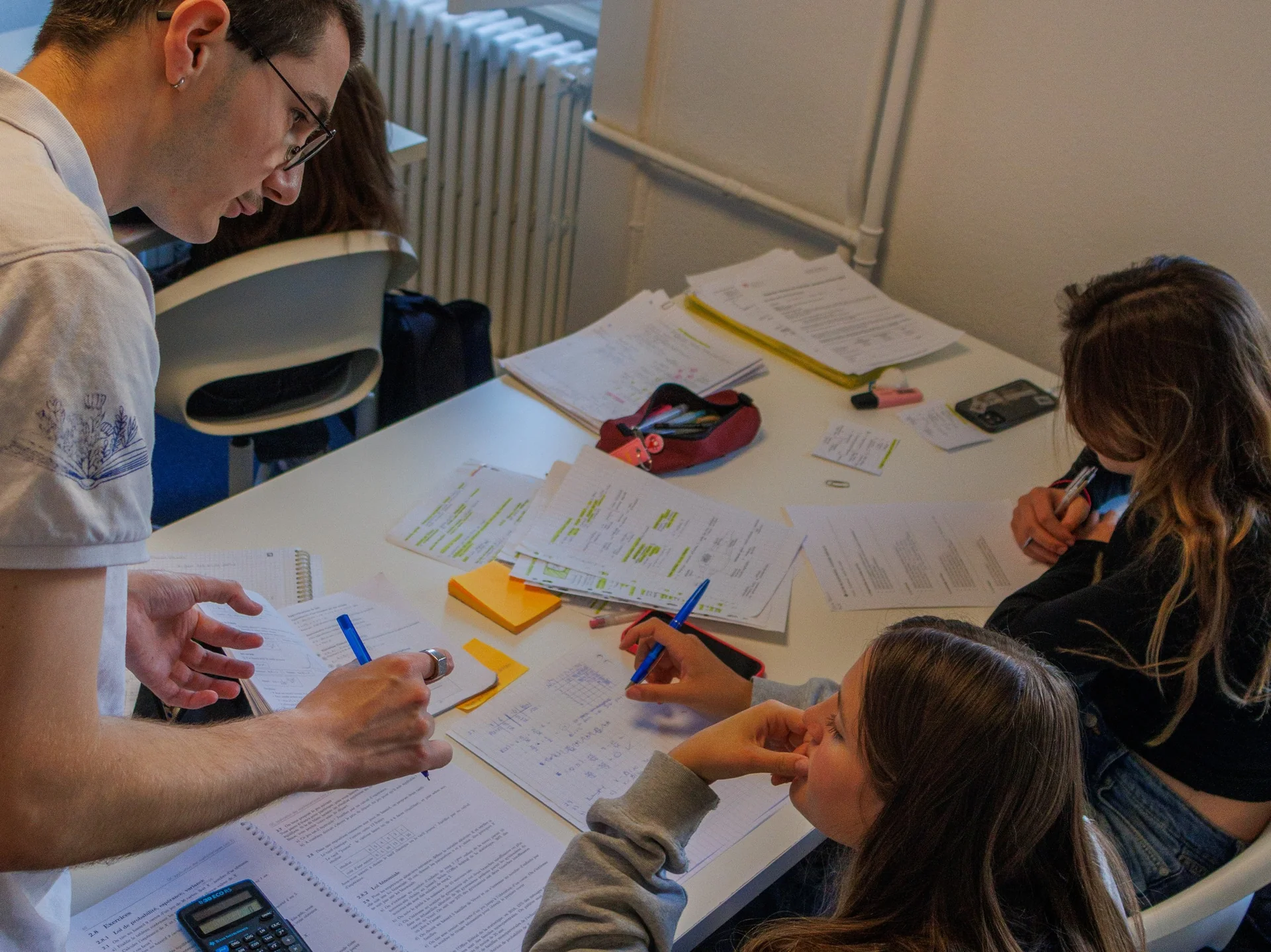
At SOS, the climb back takes three formats depending on the situation: one-to-one lessons when the gap is established and needs tailored work, semi-private lessons when two students of similar level can move forward together, and supervised study when the main need is a steady working framework, homework done, checked and understood. Every maths teacher passed a teaching test before their first lesson, their work is followed by teaching supervisors, and you receive a written report after every session. In 2025-2026, 95% of our students followed across the year passed their school year.
A maths drop can be repaired, and the earlier it is caught, the faster the repair. The fall was not sudden; the climb back almost can be: a few weeks are often enough once the right step is identified. The educational assessment is free, without commitment, and takes two minutes to request.
Going further
Our centres
A teacher near you
- Tutoring in VeveyPassage Saint-Antoine 7, 1800 VeveyRight next to Vevey station (trains and regional buses)See the centre
- Tutoring in LausanneRue Saint-Martin 9, 1003 Lausanne2 minutes from the Bessières metro stopSee the centre
- Tutoring in MontreuxAvenue des Alpes 27B, 1820 MontreuxA few minutes’ walk from Montreux stationSee the centre
What actually changes
A specialist for each subject
Not a generalist covering everything: a teacher whose discipline it is, chosen after the assessment.
Every branch covered
Maths, French, German, English, sciences, economics and accounting, from primary school to the maturité.
Progress measured, not assumed
Every session is measured against the real Vaud thresholds: promotion points, levels, ECR, certificate.
A written report after every session
You know what was covered, what is secure and what still needs work. Without having to ask.
Soutien-Omni-Scolaire
Difficulties that persist?
A teacher who specialises in their subject, across every branch: maths, French, German, English, sciences, economics and accounting. From primary school to gymnasium, in centre, at home or online.
First conversation, no commitment
Parents' frequently asked questions
My child is falling behind in maths: what should I do first?
Do not increase the pressure on the current chapter: look for the original concept. Take the latest tests and look at the recurring mistakes, they show where the chain broke. The free educational assessment does this diagnosis precisely: it establishes the real level and identifies the missing step, two minutes to request, with no commitment.
My son says he is useless at maths: is it serious?
It is a signal to take seriously, but it is not a verdict: 'useless at maths' is the conclusion he draws from his marks, not a truth about his abilities. That story usually fades when results climb, and results climb when the missing concept is rebuilt. The real risk is letting the sentence become an identity in the meantime.
My daughter works hard but cannot manage maths: why?
It is the most typical sign of a missing original concept: she is reinforcing the top floor when a step below has given way. Working harder on the current chapter does not repair an absent base. You have to go back up the chain, rebuild the original concept, then anchor what follows on top: it is diagnostic work, not volume.
How can I help my child in maths if I do not master it myself?
Your most useful role requires no maths at all: guaranteeing a calm, steady framework, taking the drama out, observing recurring mistakes, and having failed exercises redone a few days later. Explaining the concepts is a teacher's job: that is precisely the part you can delegate.
How long does it take to climb back?
It depends on the depth of the gap, and that is exactly what the initial assessment measures. An isolated concept is often rebuilt in a few weeks of targeted work; a backlog of several chapters needs a longer programme. In both cases, the earlier the diagnosis, the shorter the climb.
What if the difficulties are in French rather than maths?
The same logic applies: French is also built floor by floor (reading, spelling, grammar, writing), and an old block costs marks in every subject. Our French lessons work on the same diagnose-then-rebuild principle, and our homework article helps you set up the working framework at home.
The SOS teaching team
Tutoring · Canton of Vaud
A teaching team specialised in the Vaud school system: ECR preparation, VP and VG orientation, raccordement, gymnase entry and maturité. Centres in Vevey, Lausanne and Montreux.
Meet the SOS team →