Advice for Parents · 17 August 2026
Vaud back to school 2026: the two weeks that shape the year
Vaud pupils went back to school on Monday 17 August. A year’s learning difficulties almost always take hold now, before the first marks. Here are the signals to watch week by week, and what to do if they add up.
 By The SOS teaching team9 min readReviewed by the teaching team
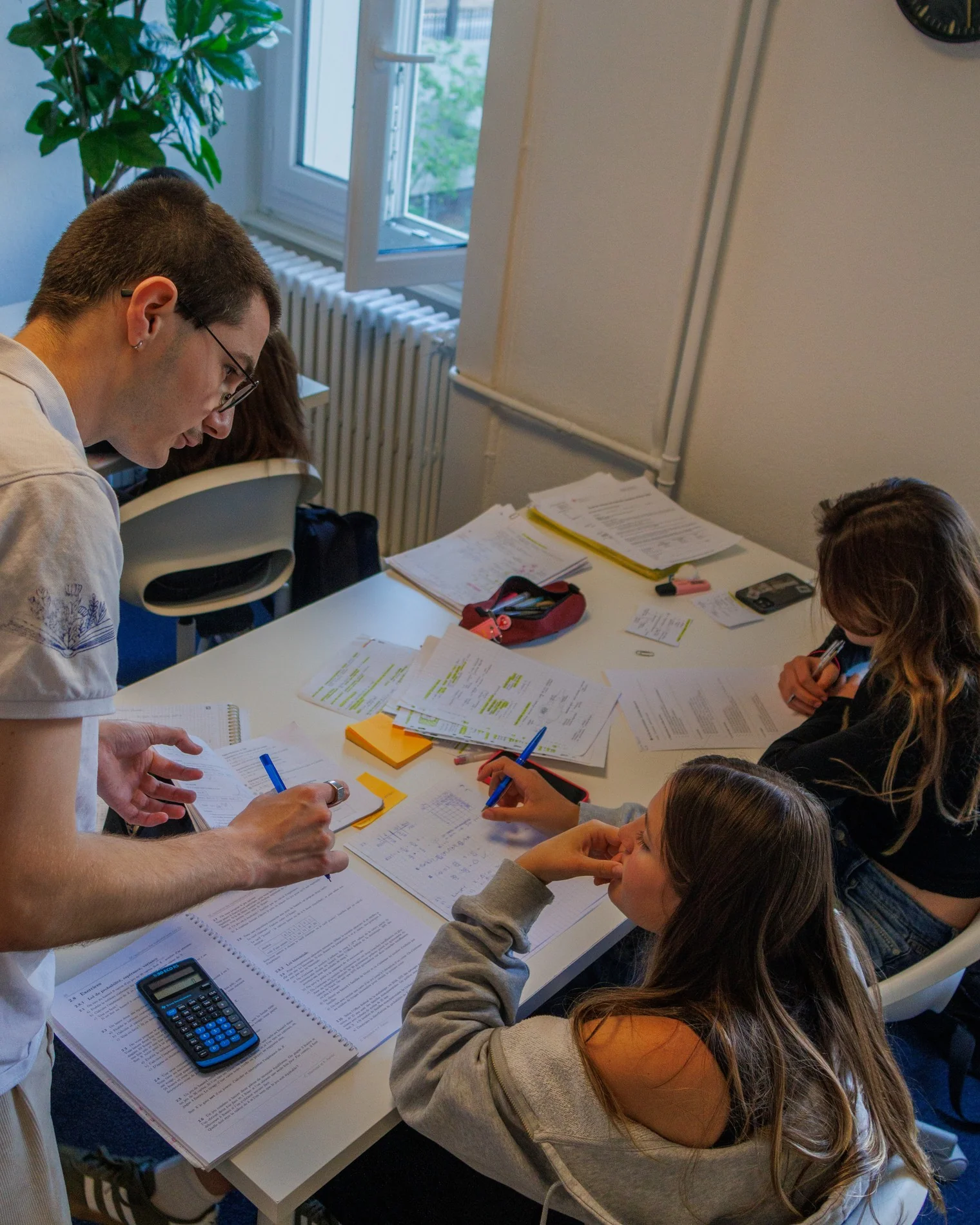
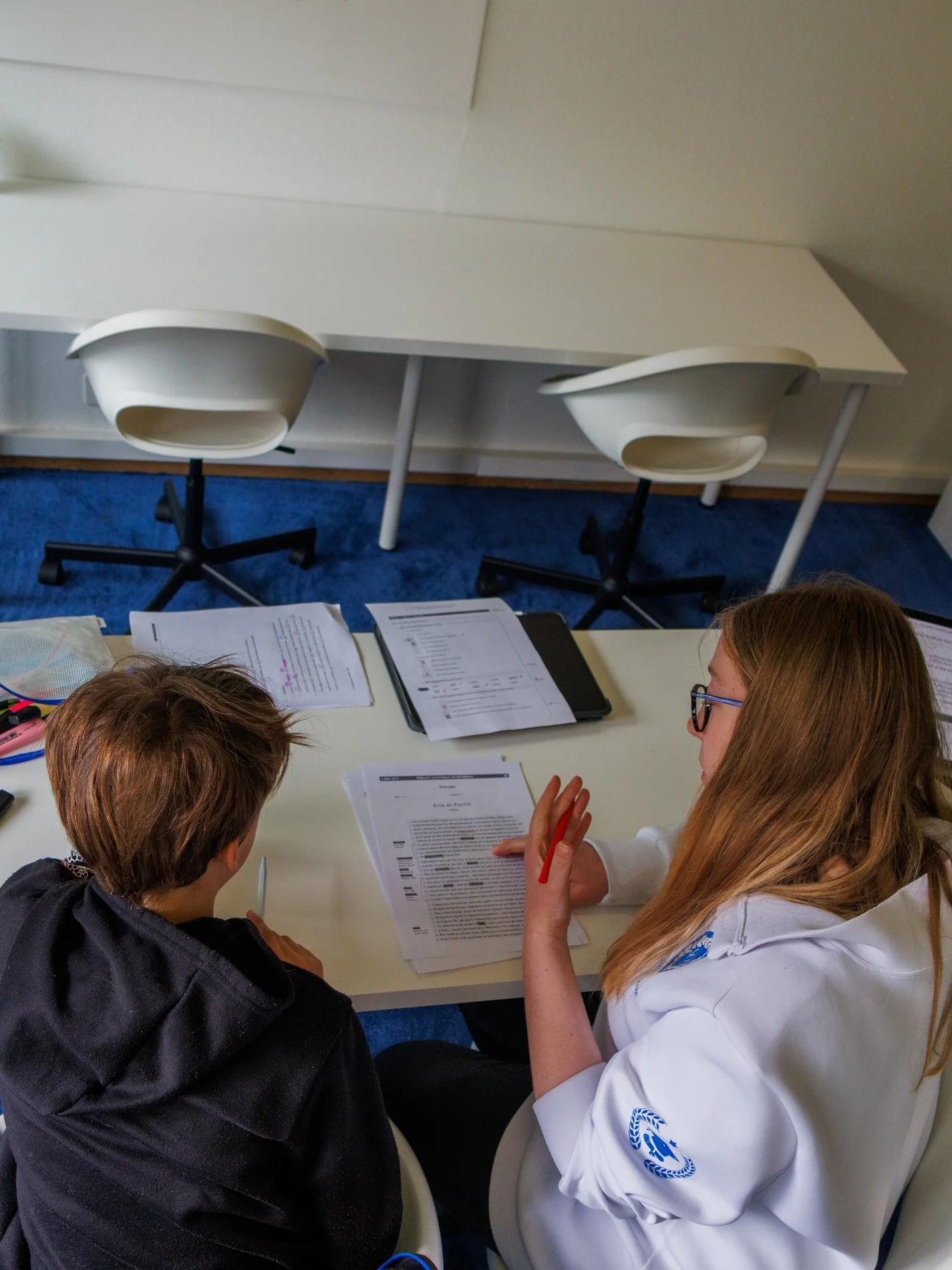
The first days of school: the year first shows its face at a work table, not in the October report card. · Photo : Soutien-Omni-Scolaire
On Monday 17 August 2026, school started again across the canton of Vaud. Tonight, in thousands of kitchens between Lausanne and Villeneuve, the same question will be asked: so, how was it? And almost everywhere, the same answer will come back: fine.
That « fine » is probably sincere. On day one, almost everything is fine. But a school year's learning difficulties do not turn up on the first morning: they settle in quietly over the following two to three weeks, well before the first marks. So it is now, between the first day and early September, that a few simple observations let you adjust the start of a year, at the moment it costs the least effort. Here they are, week by week.
Why these two weeks matter more than the first marks
Between the first day and mid-September, school is still running in neutral, or nearly so. Teachers take the measure of their class, often with small diagnostic tests that do not count. The averages that matter will only arrive in October. Many families conclude that this period is neutral, a warm-up with nothing at stake.
It is exactly the opposite. This is the only time of year when a trajectory can be corrected without first having to make up lost ground.
A pupil whose mental arithmetic faded over the summer, who has not yet worked out how to write homework down properly, or who does not yet understand a new teacher's way of explaining: all of that resolves within weeks if it is seen now. By November, the same causes will have produced averages, and the task becomes climbing back up a slope instead of simply adjusting a start.
Week 1: diary, tiredness, talk
The first week of school produces almost no paperwork. It does, however, produce three reliable signals that any parent can read, whatever their own level in the subjects concerned.
- The homework diary. Open it together, without turning it into an inspection. A diary where tasks are written down, dated and legible is the best early indicator of a year starting well. An empty diary in week two does not mean there is nothing to do: it means your child has not yet learnt to catch what is said at the end of a lesson.
- Tiredness. A new school year is tiring, and that is normal. But a child exhausted by the Wednesday of week two, or going to bed later and later because homework drags on, is showing a rhythm that is not settling.
- What gets told, and what does not. A pupil who names his teachers, recounts a moment of the day, complains about something specific, is a pupil who has found his place in the class. Complete silence, day after day, deserves a real conversation, not an interrogation.
Week 2: diagnostic tests and homework duration
From the second week, school starts to speak, provided you listen on the right channels. Diagnostic tests first: they do not count towards averages, which is precisely what makes them valuable. They say, without stakes and without stress, what survived the summer and what evaporated. Ask to see them, particularly in mathematics and German. A child who brings them home spontaneously makes your job easier; a child who « forgets » them at the bottom of the bag is telling you something too.
Then there is homework, whose duration is a thermometer. As an order of magnitude: twenty to forty minutes at primary level, around an hour at secondary. Evenings that systematically overflow that frame from week two onwards point either to a comprehension problem or to a method problem. Both can be fixed, but not in the same way, and that is the whole value of an early diagnosis.
Finally, some subjects restart higher than they left off. German and mathematics are the usual suspects: the syllabus resumes assuming that June's material is secure. Two summers in a row of that is enough to open a gap that nothing in last year's report card predicted.
Should you wait for the first marks? No, and here is why
The most common reaction to a back-to-school doubt is also the most expensive: waiting for marks to see. It sounds reasonable. It is not.
By the time the first averages land in late October, eight to ten weeks of syllabus have gone by. A struggling pupil then no longer has to fill one gap: he has to fill it while keeping up with the current pace, two efforts at once. It can be done, we help pupils do it all year long. But it takes longer, costs more energy and is harder on confidence than the simple adjustment that would have been enough in September.
“Parents often call us in November saying: we should have come earlier. They are right. Not because it is too late, but because in September the same work would have taken half the time.”
An SOS teacher, Vevey centre
8P, 9e, 11e: the years when waiting is not an option
This reasoning holds for every class, but three years make it imperative. 8P first: the May ECR count for 30% of the annual averages in the orientation decision, and they are prepared over the whole year, not in spring. Then 9e: the first year of secondary school, in the pre-gymnasial or general track, with new teachers, new expectations and a pace that surprises many pupils who were comfortable at primary level. Finally 11e, certificate year, where every term counts for what comes next: gymnasium, ECG or apprenticeship.
For these three cohorts, the first two weeks are not a warm-up. They are the first act of a year that plays out continuously.
How to help your child at home
When a signal appears, the temptation is to tighten the screws: more control, more hours, more pressure. That is usually counterproductive. What works comes down to a few things, and none of them requires turning the living room into a classroom or playing teacher.
- A fixed homework time, the same every day, agreed with the child rather than imposed. Regularity does more than duration.
- A stable place to work, phone out of reach. No need for a minister's desk: a clear table is enough.
- Ten minutes with the diary on Sunday evening, together, to look at the week ahead. The best effort-to-effect ritual we know.
- Questions that invite a story rather than a yes or no: what did you do in maths, rather than did it go well.
When should you turn to academic support?
Let us be clear: most pupils need nothing more than their parents, a stable framework and a few weeks to find their feet. If your child writes homework down, sleeps normally and talks about the day, this school year is starting well, and this article calls for nothing further.
If, on the other hand, the signals described above start adding up, the right answer is neither panic nor patience: it is a diagnosis. That is exactly what our free educational assessment is for, with no commitment, in our Vevey, Lausanne and Montreux centres: thirty minutes to establish the real level, distinguish what belongs to method, subject matter or confidence, and leave with a written document, whether or not you then decide to work with us.
Timing matters here: our supervised study groups resume on Tuesday 1 September in all three centres. An assessment done this week or next confirms the right group before restart, so the year begins at the pace of the syllabus rather than chasing it. As every year, the weekday end-of-day slots are the first to fill.
The fortnight in brief
- 1A year's difficulties settle in during the first 2 to 3 weeks, before any marks: right now is when an adjustment costs the least.
- 2Week 1, three signals: the homework diary, tiredness, and what your child tells you about the day.
- 3Week 2: ask to see the diagnostic tests and keep an eye on how long homework really takes.
- 48P, 9e and 11e: pivotal years where waiting for October carries a heavy price, starting with ECR at 30% of the averages.
- 5At the slightest doubt: a free educational assessment now, so the group is confirmed before supervised study resumes on 1 September.
What we put in place from the very first weeks
These two weeks are also when support costs the least, because it is still a matter of adjusting rather than catching up. Our free assessment places the student against the real milestones of their year: promotion points, a possible change of level in January, ECR where relevant.
The student is then matched with a teacher who specialises in the subject concerned, and we cover every branch, from maths to economics. Progress is not assumed: every session produces a written report, and the work is measured against the real Vaud thresholds, not a general impression.
In Vevey, Lausanne and Montreux, in centre, at home or online: the most useful thing at this point in the year is simply to know where your child stands before the first marks come in.
Going further
What actually changes
A specialist for each subject
Not a generalist covering everything: a teacher whose discipline it is, chosen after the assessment.
Every branch covered
Maths, French, German, English, sciences, economics and accounting, from primary school to the maturité.
Progress measured, not assumed
Every session is measured against the real Vaud thresholds: promotion points, levels, ECR, certificate.
A written report after every session
You know what was covered, what is secure and what still needs work. Without having to ask.
Soutien-Omni-Scolaire
Difficulties that persist?
A teacher who specialises in their subject, across every branch: maths, French, German, English, sciences, economics and accounting. From primary school to gymnasium, in centre, at home or online.
First conversation, no commitment
Parents' frequently asked questions
When did the 2026 school year start in the canton of Vaud?
On Monday 17 August 2026 for compulsory school. The marks that count generally arrive from October, which leaves a few weeks to adjust the start without chasing the syllabus.
What signs show that a child is struggling at the start of the year?
The most reliable ones in the first two weeks: an empty or illegible homework diary, tiredness that worsens instead of easing, homework that systematically overruns the normal time, complete silence about the school day, and weak diagnostic tests in mathematics or German.
My child says everything is fine: should I worry anyway?
Not worry: observe. The three reliable signals of the first weeks are the homework diary (is homework written down?), tiredness (is the rhythm settling?) and what your child tells you about the day. If all three are green, the year is starting well.
What are the beginning-of-year diagnostic tests for?
They do not count towards averages: they help teachers take the measure of the class. For parents they are precious because they show, without stakes, what survived the summer. Ask to see them, particularly in mathematics and German.
How long should homework take?
As an order of magnitude: twenty to forty minutes at primary level, around an hour at secondary. Evenings that systematically overflow from week two onwards signal a comprehension or method difficulty, and the two are not treated the same way.
Why not wait for the first marks before acting?
Because they arrive in late October, after eight to ten weeks of syllabus. The pupil then has to fill the gap while keeping up with the current pace, two efforts at once. The same adjustment made in September costs roughly half the time and energy.
Which school years call for the most vigilance at the start?
8P, because the May ECR count for 30% of annual averages in the orientation; 9e, the first year of secondary school with its new demands; and 11e, certificate year, where every term counts for gymnasium, ECG or apprenticeship.
What does the free SOS educational assessment involve?
Thirty minutes, at a centre or by phone, free and with no commitment. We establish the pupil’s real level, distinguish what belongs to method, subject matter or confidence, and you leave with a written document, whether you continue with us or not.
When does SOS supervised study resume?
On Tuesday 1 September 2026, in the three centres in Vevey, Lausanne and Montreux. An assessment done before restart confirms the right group so the year begins at the pace of the syllabus. Weekday end-of-day slots fill first.
The SOS teaching team
Tutoring · Canton of Vaud
A teaching team specialised in the Vaud school system: ECR preparation, VP and VG orientation, raccordement, gymnase entry and maturité. Centres in Vevey, Lausanne and Montreux.
Meet the SOS team →