Advice for Parents · 24 August 2026
My child won't do their homework: understand before you punish
The school bag has been sitting there for an hour, the diary has not moved, and the same sentence returns every evening: 'I'll do them later'. A child who does not do their homework is almost never lazy: the refusal is a symptom, with three possible causes that call for very different responses. Here is how to tell them apart, what research says, and the method for building the routine.
 By The SOS teaching team10 min readReviewed by the teaching team
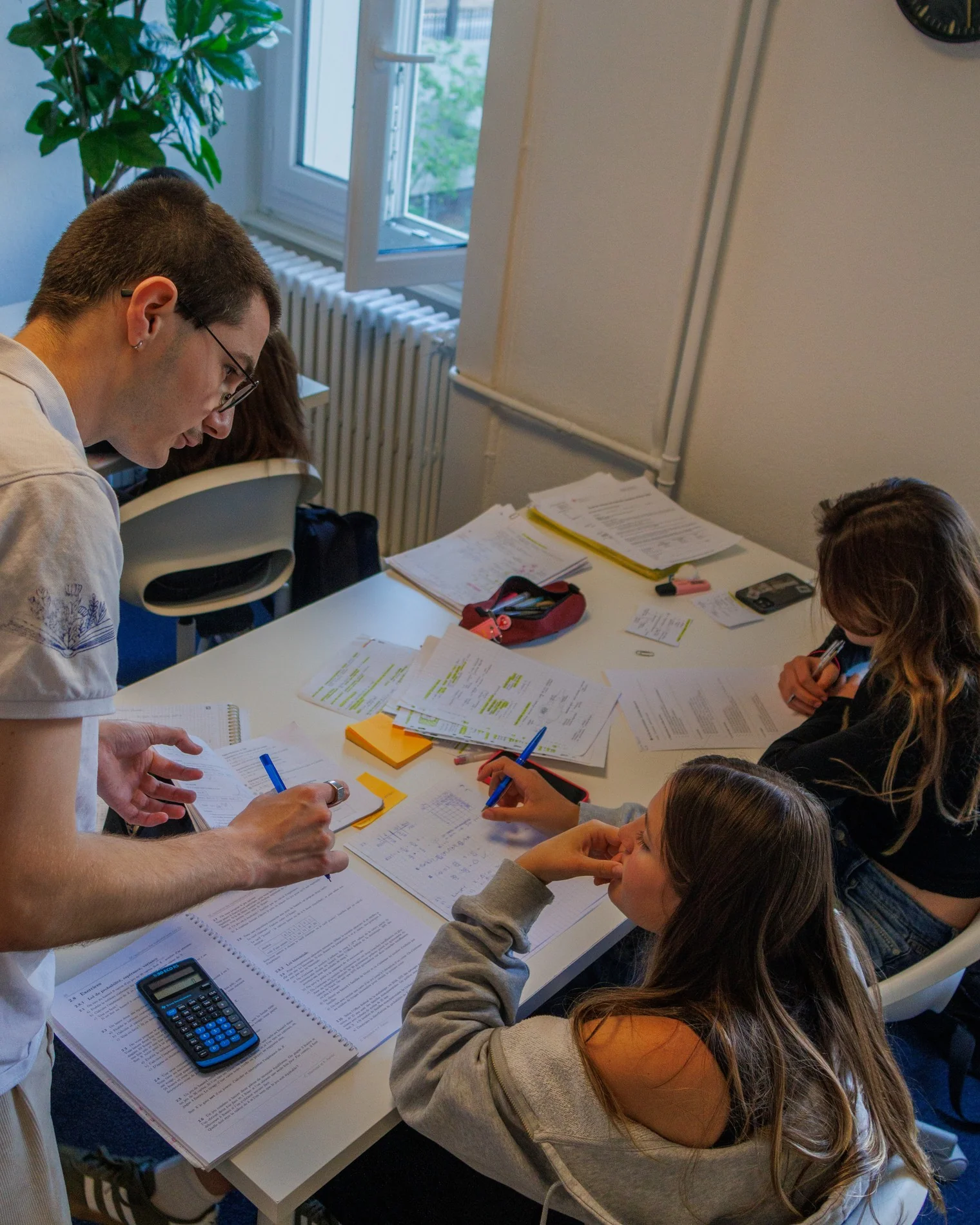
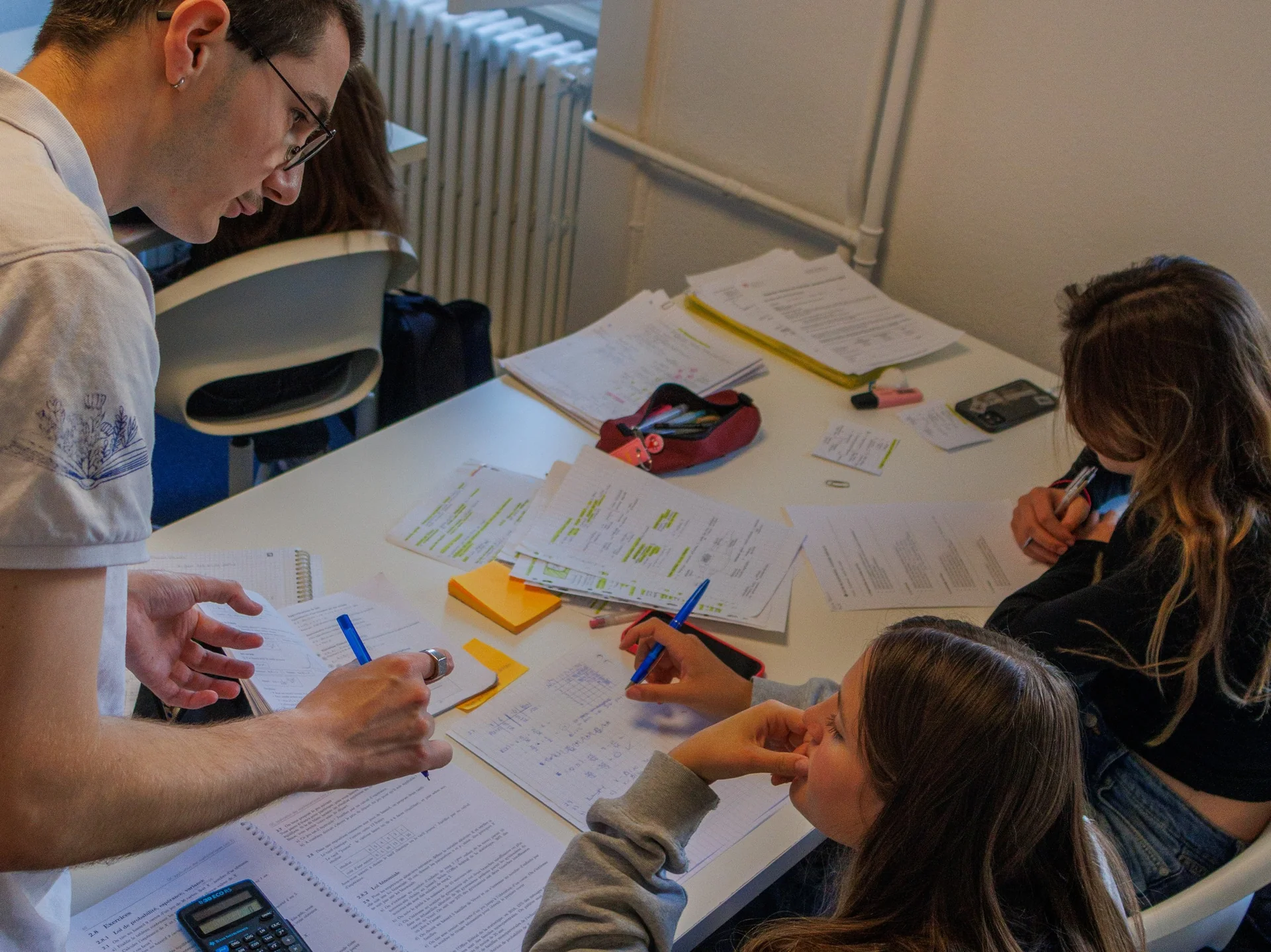
The exercise book is open, and that is often where everything plays out: what happens around the table matters more than the time spent at it. · Photo : Soutien-Omni-Scolaire
The school bag has been sitting there for an hour, the diary has not moved, and the same sentence returns every evening: 'I'll do them later'. In many families, the August rentrée also marks the return of a conflict parents know by heart: the homework battle. It wears out the child, it wears out the parents, and it often leaves the feeling of getting everything wrong.
Let us start with good news: a child who does not do their homework is almost never a lazy child. The refusal is a symptom. It has a small number of possible causes, and they call for very different responses. This article looks at what research actually says about homework, distinguishes three situations that are often confused, gives a concrete method for building the routine in the first weeks of school, and reviews the solutions available in the canton of Vaud.
In a hurry? The essentials in six points
- 1Homework refusal has three main causes: not knowing what to do, not knowing how to do it, not wanting to do it. Each one is treated differently.
- 2Research is clear: homework matters little for results in primary school and a lot in secondary school. In primary, the goal is building the habit, not extending the time.
- 3Homework that works is short, regular, precise and followed up by an adult. Volume never replaces consistency.
- 4Punishing treats the symptom, not the cause. If the refusal comes from a learning gap, punishment reinforces avoidance.
- 5A routine is made or lost in the first two weeks: fixed time, fixed place, phone in another room, a ritual to close the session.
- 6If homework durably exceeds the age benchmarks or turns into a daily conflict despite a stable framework, get a diagnosis. That is exactly what our free educational assessment is for.
What research actually says about homework
Homework is one of the most studied topics in education research, and its conclusions are more nuanced than the debates suggest. The most cited synthesis, led by Harris Cooper at Duke University from several dozen studies, reaches a result every parent should know: the link between homework and school results is clear in secondary school, and weak in primary school. Young children still manage distractions poorly and have no established work habits: asking them for long sessions does not produce better results.
John Hattie's large synthesis, which aggregates the results of hundreds of meta-analyses, finds exactly the same gap: the average effect of homework is modest across schooling as a whole, weak in primary, and substantial in secondary. In other words, the question is not 'for or against homework', it is 'what role does it play at my child's age'.
“Even for high school students, overloading them with homework is not associated with higher grades.”
Harris Cooper, Duke University
Two practical consequences. First, in primary school, your goal is not the evening's output, it is building a habit: a stable, short, drama-free moment that prepares for secondary school, where personal work becomes decisive. Second, at any age, overload is useless: the same research shows that effective homework is short, frequent, precise in its instructions and followed up by an adult. A commonly cited benchmark, endorsed by Cooper, is ten minutes per year of schooling: roughly twenty to thirty minutes by the middle of primary school, around an hour at the end of compulsory school. It is not an official Vaud rule, it is an order of magnitude: if your child is far beyond it every evening, the problem is not their willpower, and forcing them to stay at the table longer will not change anything.
Three refusals that look alike, three causes that have nothing in common
Seen from the living room, it is always the same scene: the child does not get started. Seen up close, three very different situations produce that same scene, and the response that helps in one makes another worse. The first thing to do is therefore not to crack down, it is to identify which one you are living with.
'They don't know what to do': an organisation problem
A poorly kept diary, half-noted instructions, materials left in class, homework discovered the night before the deadline: for many pupils, especially at the start of secondary school, the block is purely organisational. The child is not refusing the work, they do not know where to start, and that confusion disguises itself as bad will. The answer is a material framework: diary checked at a fixed time, bag prepared the night before, big assignments cut into dated steps. It is the easiest cause to treat, and one of the most common.
'They can't do it': a learning-gap problem
This one is missed most often, because it hides behind the others. A child who has fallen behind in a subject knows, before even opening the exercise book, that the exercise will put them in failure. Avoiding homework then becomes protection: you cannot fail what you never start. The signals pointing to this cause are precise: one subject systematically avoided while the others go fine, a recurring 'I have nothing to do' that the diary contradicts, marks slipping across several tests. Here, neither routine nor firmness will be enough: as long as the gap is not identified and closed, every homework evening confirms to the child that they 'can't do it'.
'They won't do it': a motivation problem
That leaves the case where the child knows what to do and how to do it, but does not do it. Before reading it as defiance, look at the context: a badly chosen moment, right after six periods of class with no real break; screens available in the same room, against which no exercise book can win; a week saturated with activities; or a parent-child relationship worn down by months of reminders, where homework has become the arena of a standoff that is no longer about school. Motivation is rebuilt through structure and supervised autonomy, rarely through pressure.
Why punishing often makes the problem worse
Faced with refusal, the natural reaction is sanction: no screens, no outings, no weekend. It sometimes works for a few days, then the situation returns, worse. The reason is simple: punishment tells you nothing about the cause. If your child cannot manage it, punishing amounts to sanctioning a difficulty they do not control, and the message they retain is not 'I must work', it is 'I am useless and it keeps being confirmed'. Avoidance grows stronger.
There is a second, quieter mechanism: through reminders, checks and arguments, the parent becomes both enforcer and corrector. Homework stops being the child's business and becomes the parent's, and every evening replays the same confrontation. Our position, based on what we observe every year in our centres, fits in one sentence: the parent's role is to guarantee the conditions of the work, not to redo the lesson. Setting the time, the place and the calm, opening the session, closing it, looking at what was done: yes. Sitting alongside every evening, explaining Year 9 maths, correcting every line: that is the shortest road to conflict, and the sign that the educational side should be entrusted to someone else.
Building the routine: the first-two-weeks method
The rentrée is the best window of the year for this: September habits are the ones that hold until June. Here is the framework we recommend to parents, to adapt to the child's age.
- A fixed moment, chosen with the child, not against them: a child who chose 'after the snack' defends their own choice. Allow a real break after school before starting.
- A single, tidy place, always the same, with materials within reach. The phone stays in another room for the whole session: on the table, even switched off, it is enough to scatter attention.
- A duration capped by age, using the ten-minutes-per-year-of-schooling benchmark. A short, complete session beats an hour of listless presence.
- Start with the hardest task, when attention is freshest, and keep the easy work for the end.
- The parent opens and closes the session. At the start: look at the diary together and list what there is to do. At the end: the child shows what was done, and the bag is prepared for the next day. In between, they work alone.
- Hold for ten school days without exception before judging the setup. A routine only becomes a routine once it is no longer negotiated every evening.
If, after two weeks of a genuinely constant framework, evenings are still battles or homework still a marathon, remember this: the problem is no longer the routine. It is the signal that one of the two other causes is at play, organisation or learning gaps, and that what is needed is a diagnosis rather than more firmness.
Homework help, devoirs surveillés, supervised study: who does what in the canton of Vaud
These three terms are often used as synonyms. In the canton of Vaud they cover very different realities, and knowing which one matches your situation avoids a lot of disappointment.
Municipal devoirs surveillés. Vaud communes organise supervised homework sessions in which parents can enrol their child from the 3rd year of school, at least three working days a week. It is a precious framework: a calm place, a regular schedule, an adult presence. But the canton of Vaud states it itself: devoirs surveillés are not educational support. The person supervising makes sure the time is spent on homework; their role is not to explain a poorly understood concept nor to check that the work is correct. For an autonomous child who only needs structure, it is often enough.
Homework help. Under this name you find everything: associations, students, platforms, neighbours. The quality depends entirely on the person you land on, their ability to explain and their consistency through the year. In another magazine article we detailed the precise questions to ask before entrusting your child to someone.
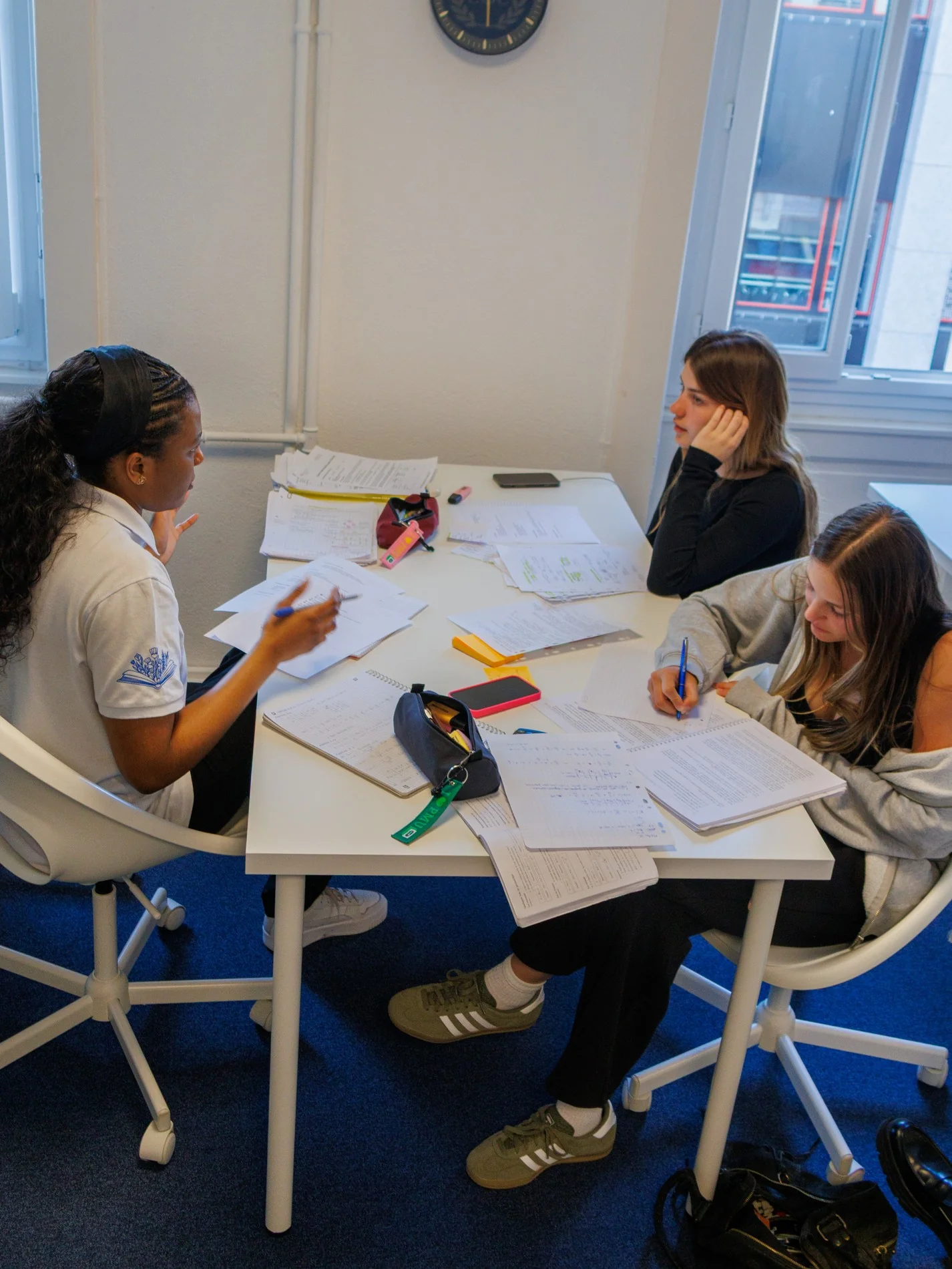
Supervised study. This is the formula we built at SOS precisely for the situation described in this article: the educational supervision of homework. The difference with mere surveillance fits in three verbs: at every session, homework is done, checked and understood. Teachers covering all subjects are present in the room, explain what is blocking, verify that the work is correct, anticipate upcoming tests, and send you a report after every session. Every evening you know what was done, what was understood and what remains fragile.
The signals that should alert you
One bad week means nothing; every pupil has them. What should hold your attention is duration and repetition. Here are the signals which, in our experience, justify not waiting for the next report card:
- Homework durably exceeds the age benchmarks, evening after evening, despite a calm framework.
- One specific subject is systematically avoided, 'forgotten' or rushed.
- Marks slip across several tests in a row, even modestly.
- The diary is repeatedly empty although the class clearly has work.
- The homework conflict has been daily for more than a month despite a stable routine.
- The child puts themselves down: 'I'm useless', 'it's pointless', 'I'll never manage'.
Each of these signals, in isolation, can have a mundane explanation. Two or three together, settled over time, almost always indicate an underlying cause, and the earlier it is identified, the lighter the catch-up. That is exactly what the educational assessment settles: it establishes the child's real level, identifies the origin of the block, and you leave with a clear recommendation, whether you continue with us or not. It is free, without commitment, and takes two minutes to request.
How we supervise homework at SOS
Our supervised study runs from September to June, in our Vevey, Lausanne and Montreux centres, at one to three two-hour sessions per week, all subjects included, from CHF 240.- per month. The teachers who run the sessions passed a teaching test before their first lesson and work under the supervision of teaching supervisors; after every session, you receive a report. And when the assessment reveals an established gap in one specific subject, a targeted private lesson can complement supervised study for as long as it takes to close it. Full rates are displayed on our Pricing page, with no hidden fees.
This follow-up produces results we measure: in 2025-2026, 95% of our students followed across the school year passed their year. And it changes daily family life: parents are relieved of the schoolwork follow-up, homework and tests are taken care of, and the relationship at home can breathe.
The homework battle is not an inevitability of family life. It is a symptom that can be decoded, a routine that can be built, and, when needed, supervision that can be delegated. The most important thing is not to let the situation settle in: in this matter, September always beats February.
Going further
Our centres
A teacher near you
- Tutoring in VeveyPassage Saint-Antoine 7, 1800 VeveyRight next to Vevey station (trains and regional buses)See the centre
- Tutoring in LausanneRue Saint-Martin 9, 1003 Lausanne2 minutes from the Bessières metro stopSee the centre
- Tutoring in MontreuxAvenue des Alpes 27B, 1820 MontreuxA few minutes’ walk from Montreux stationSee the centre
What actually changes
A specialist for each subject
Not a generalist covering everything: a teacher whose discipline it is, chosen after the assessment.
Every branch covered
Maths, French, German, English, sciences, economics and accounting, from primary school to the maturité.
Progress measured, not assumed
Every session is measured against the real Vaud thresholds: promotion points, levels, ECR, certificate.
A written report after every session
You know what was covered, what is secure and what still needs work. Without having to ask.
Soutien-Omni-Scolaire
Difficulties that persist?
A teacher who specialises in their subject, across every branch: maths, French, German, English, sciences, economics and accounting. From primary school to gymnasium, in centre, at home or online.
First conversation, no commitment
Parents' frequently asked questions
My child refuses to do their homework, should I punish them?
Not before understanding the cause. If the refusal comes from a learning gap, punishment sanctions a difficulty the child does not control and reinforces avoidance. Start with a stable framework for two weeks: fixed time, fixed place, phone in another room. If the refusal persists despite that framework, look for the cause with a diagnosis rather than one more sanction.
How much time should my child spend on homework each evening?
The research-backed benchmark is about ten minutes per year of schooling: twenty to thirty minutes by the middle of primary school, around an hour at the end of compulsory school, up to two hours at gymnase. If your child is far beyond these orders of magnitude every evening, it is a signal to take seriously, not a reason to extend the sessions further.
Should I do the homework with my child?
Your most useful role is guaranteeing the framework: open the session by looking at the diary together, close it by looking at what was done. Occasionally explaining an instruction, yes; redoing the lesson every evening, no. If your child needs regular explanations to move forward, that is the sign that educational supervision is needed, not more parental hours.
What is the difference between devoirs surveillés and supervised study?
Municipal devoirs surveillés offer a calm place and an adult presence, from the 3rd year of school; the canton of Vaud states that they are not educational support. Our supervised study adds precisely that dimension: teachers get the homework done, check it, explain what blocks, anticipate tests and send parents a report after every session.
Are my commune's devoirs surveillés enough?
Often yes, if your child is autonomous and only needs a calm setting to work. They stop being enough when the child needs explanations, is falling behind in a subject, or hands in work that is done but wrong: surveillance guarantees the work time, not the understanding.
When should I start worrying?
When several signals last together: endless homework evening after evening, one subject systematically avoided, marks slipping across several tests, daily conflict for more than a month despite a stable routine. The free educational assessment then settles whether it is an organisation, learning-gap or motivation problem, by establishing the child's real level.
Do you offer homework help in Vevey, Lausanne and Montreux?
Yes, in the form of our supervised study: one to three two-hour sessions per week, all subjects included, from September to June, from CHF 240.- per month, in our three centres in Vevey, Lausanne and Montreux. Homework is done, checked and understood, with a report to parents after every session.
The SOS teaching team
Tutoring · Canton of Vaud
A teaching team specialised in the Vaud school system: ECR preparation, VP and VG orientation, raccordement, gymnase entry and maturité. Centres in Vevey, Lausanne and Montreux.
Meet the SOS team →