News · 13 August 2026
Supervised study: what really happens between 5pm and 7pm
Two supervised hours, sometimes four times a week, and a school year that turns around. A close look at the quietest and most effective form of academic support, as SOS supervised study resumes on 1 September in Vevey, Lausanne and now Montreux.
 By The SOS teaching team8 min readReviewed by the teaching team
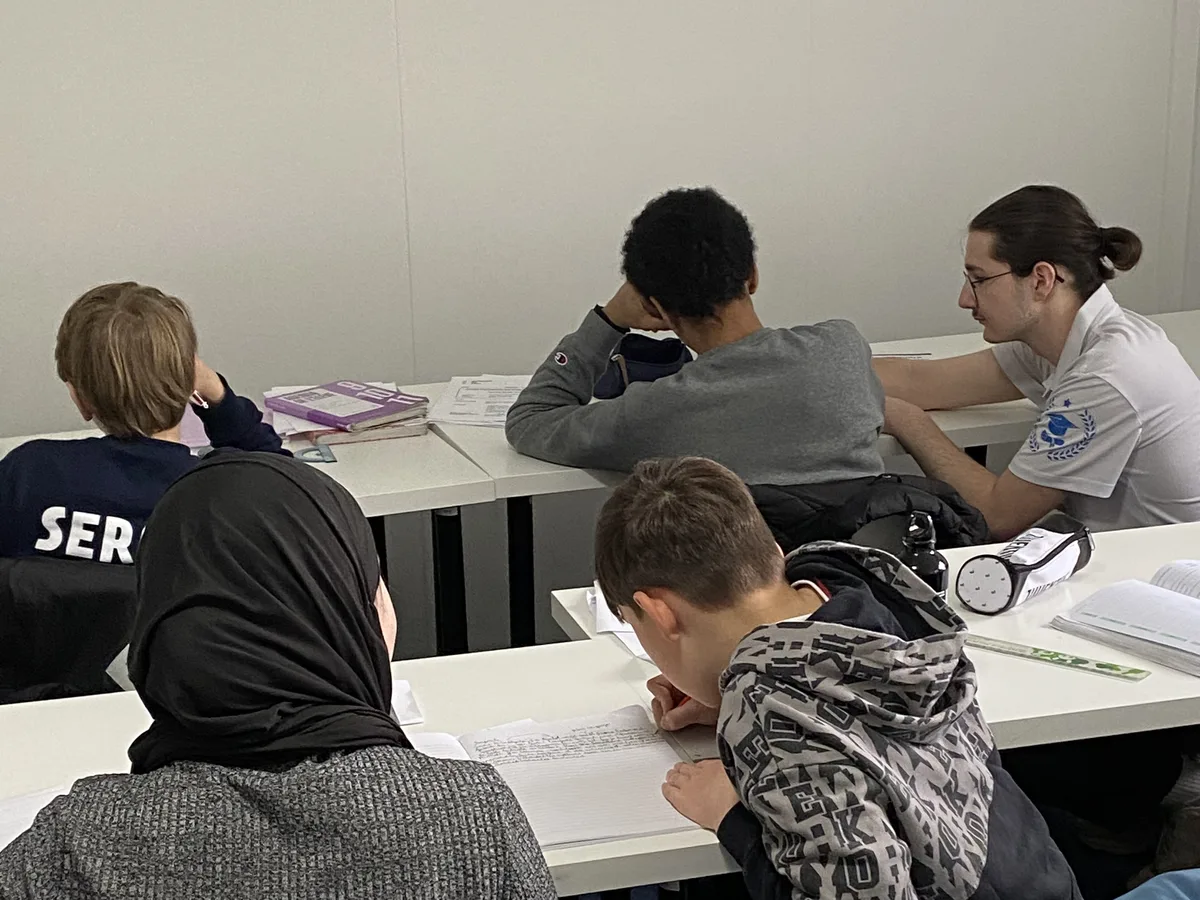
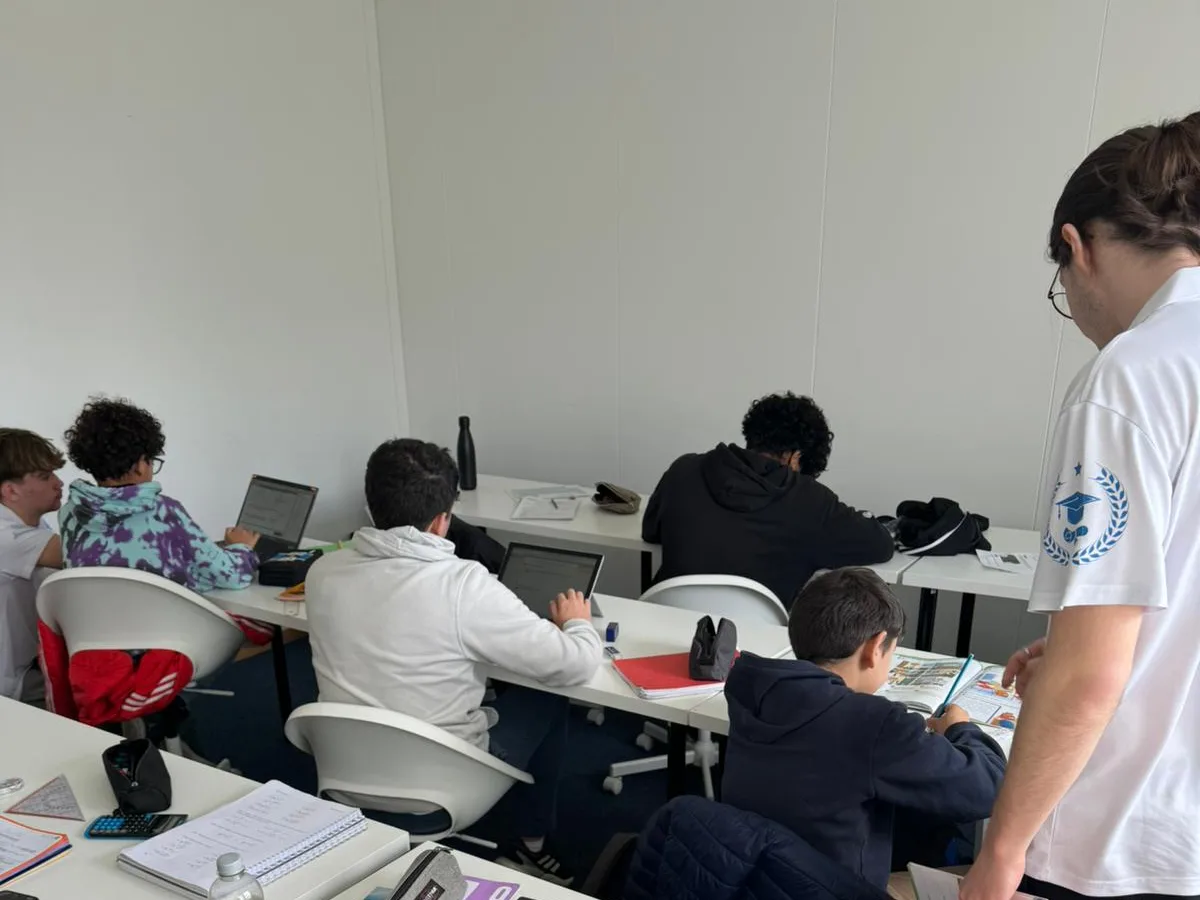
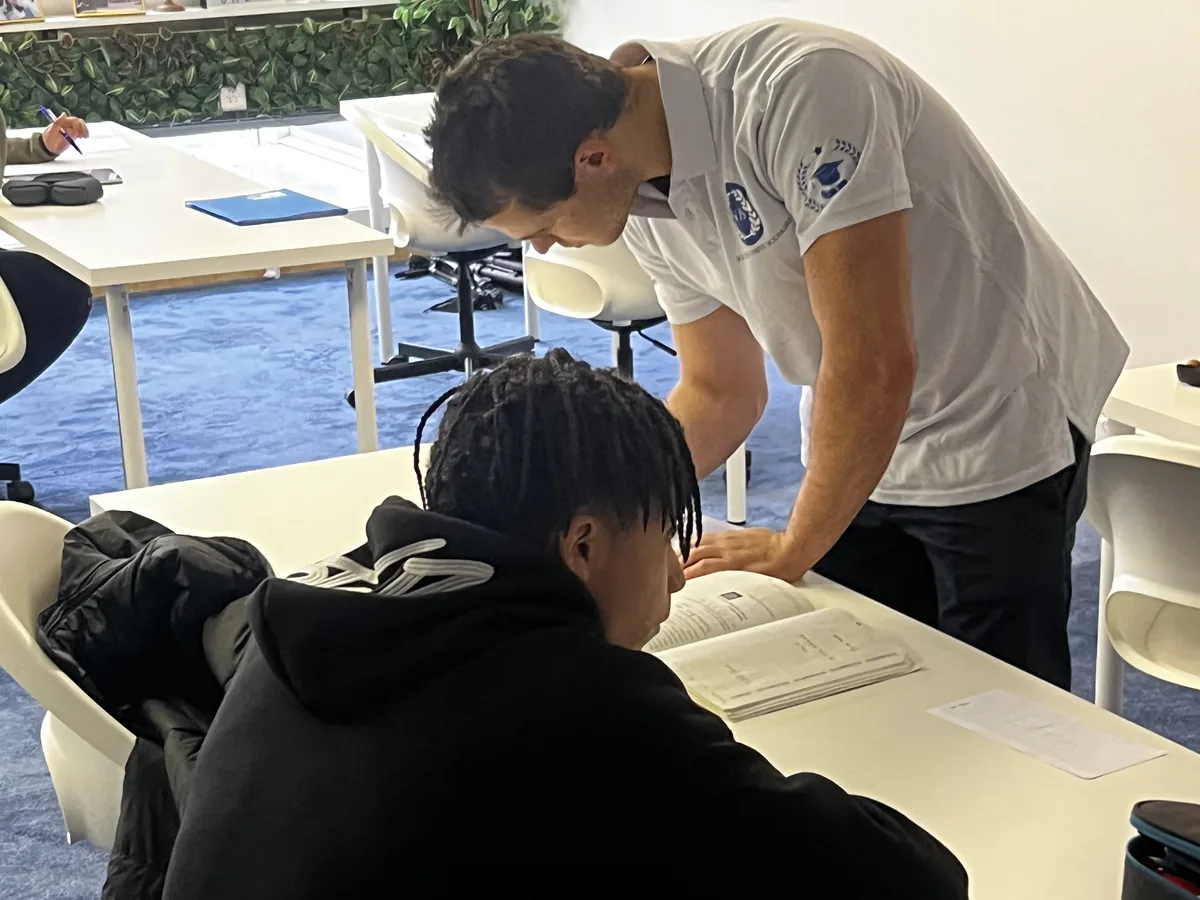
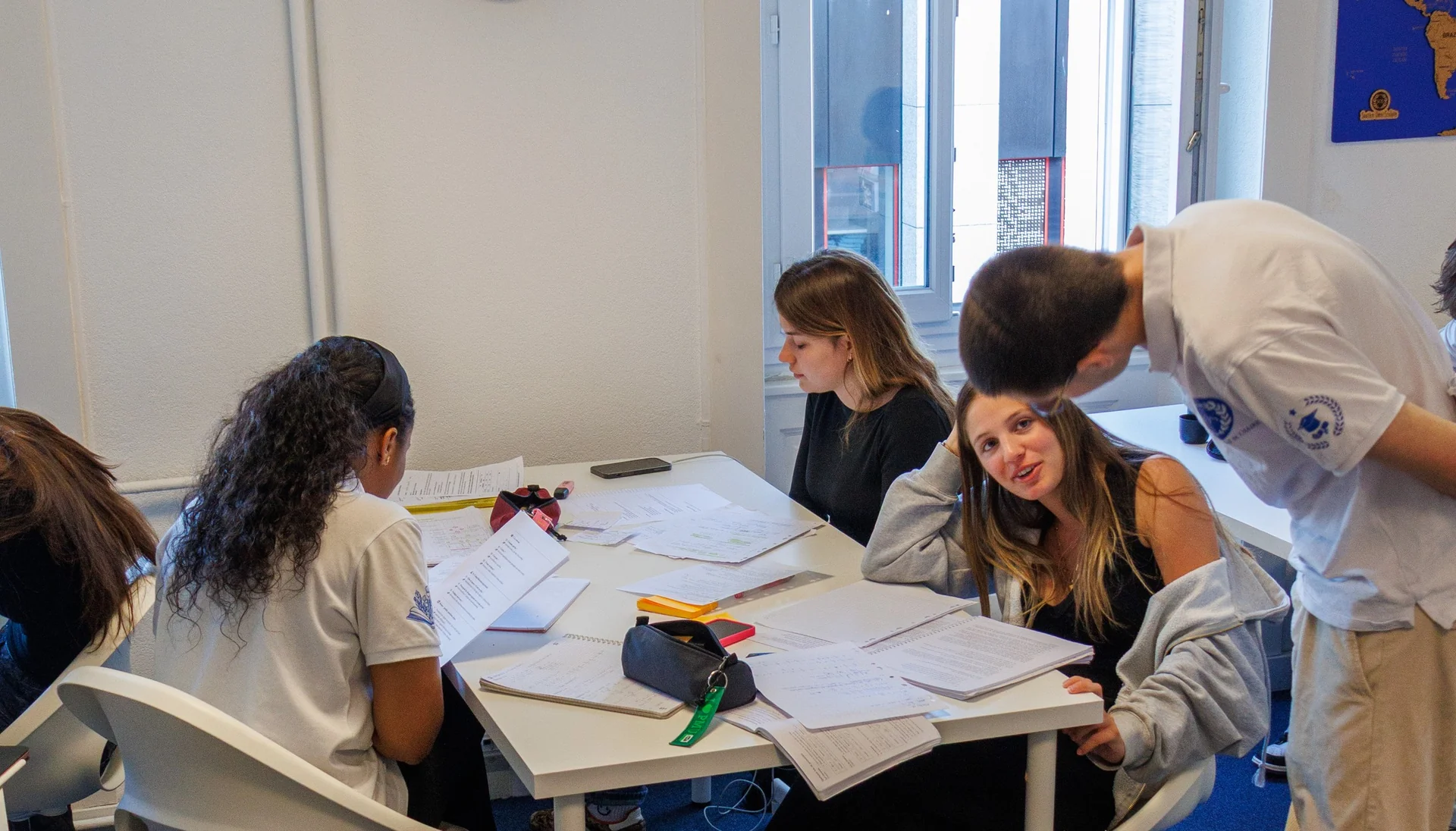
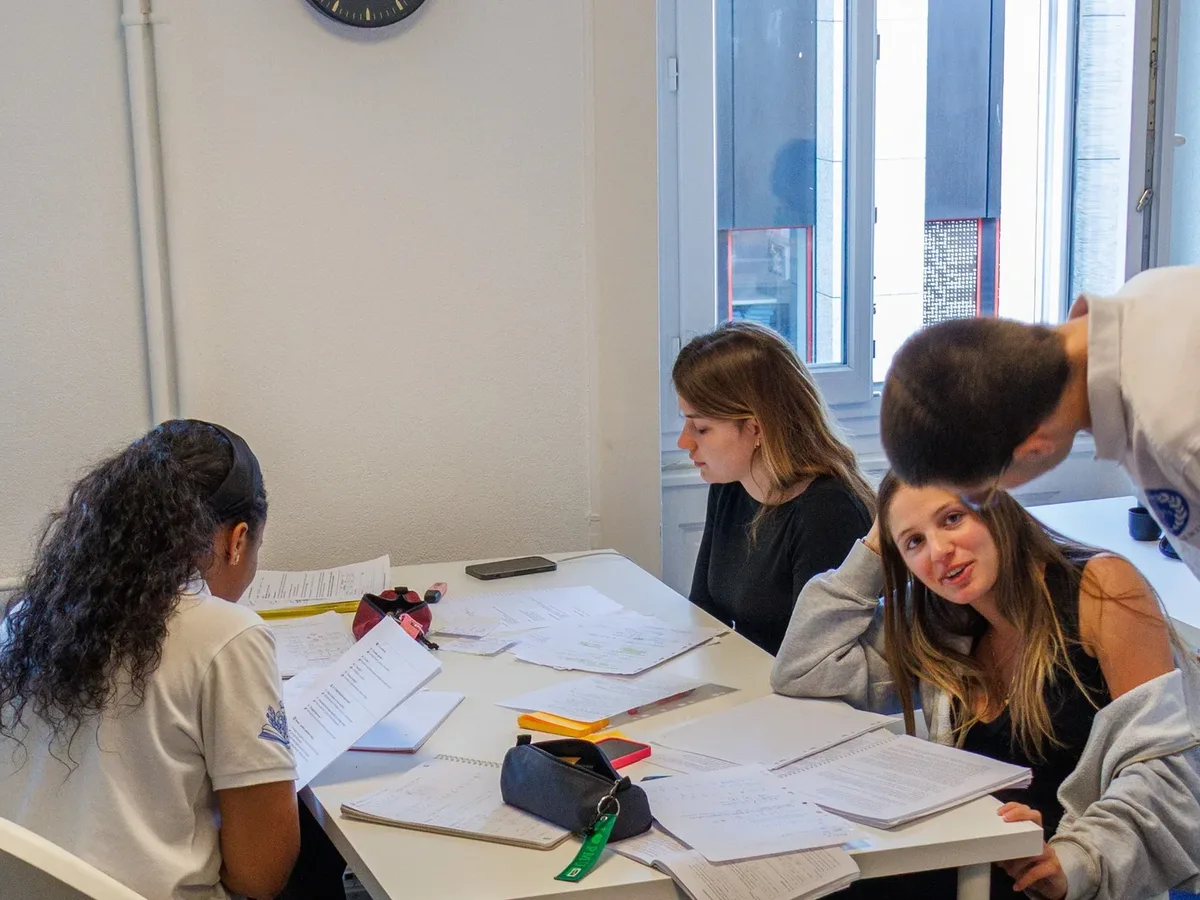
Late afternoon at an SOS centre: small groups, homework checked, and a teacher moving from one table to the next. · Photo : Soutien-Omni-Scolaire
It is 5pm, the door opens, bags drop to the floor. Within fifteen minutes, seven or eight pupils will have taken out their diaries, and a teacher will have stopped behind each of them to ask the same, seemingly ordinary question: what do you have to do for tomorrow?
That is where the essential happens. Not in the big orientation decisions, not in last-minute revision courses. In the quiet, repeated check, two or three times a week, that the work is done and, above all, understood.
Soutien-Omni-Scolaire supervised study resumes on Tuesday 1 September 2026, for the first time across three centres: Vevey, Lausanne and Montreux. A good moment to explain what this rather dull phrase really covers, and why it forms the very heart of our work.
Neither childcare nor private tutoring
The misunderstanding is common. Many parents picture a silent room where children are parked until an adult collects them. Others imagine the opposite, a group private lesson where one teacher instructs several pupils at once.
Supervised study is neither. It is a structured work setting with a fixed method. The session begins with a homework check, continues with supervised personal work in a small group, and ends by verifying what has been grasped. Every week, objectives are reviewed. Regularly, school results are analysed with the pupil.
What separates it from ordinary homework help is the written record. After every session, parents receive a report on the work done and the progress observed. A parent coming home at 7.30pm knows what their child did between 5pm and 7pm, where they got stuck, and what still needs consolidating.
“The pupil does not just leave with homework done. They leave having understood it, and we know exactly where they stand.”
Why two supervised hours beat four hours alone
The question comes back every September: why pay for a setting to do homework a child could do at home? The answer lies in three obstacles most families know well.
The first is distraction. At home, between the phone, siblings and tiredness, two announced hours of work often become forty real minutes. In a room designed for it, with an adult present, the hourly yield is nothing alike.
The second is the silent block. A pupil alone facing an exercise they do not understand does one of three things: skips it, copies an answer, or gives up. None of those strategies shows up in the diary. The teacher moving between tables spots it within seconds.
The third is family conflict. In the evening, checking homework turns many households into a battlefield. Outsourcing that check often gives parents back a calmer relationship with their child, which is no small matter.
The moment of the week when it all happens
The time slots are not chosen at random. They follow the real rhythm of pupils in Vaud: late afternoon on weekdays, the free Wednesday, and Sunday morning to get ahead of the coming week.
- Vevey: Monday, Tuesday and Thursday 5pm to 7pm; Wednesday 1.30pm to 3.30pm and 4pm to 6pm; Sunday 10am to 12pm and 1pm to 3pm.
- Lausanne: Monday 5pm to 7pm, Wednesday 1.30pm to 3.30pm, Sunday 10am to 12pm, with further slots added during the year.
- Montreux: same slots as Vevey, enrolment open.
The Sunday morning slot, often met with raised eyebrows at first, is among the most requested. It means arriving on Monday with homework done and the week anticipated, instead of enduring it from day one.
Autumn 2026: Montreux joins Vevey and Lausanne
Until this year, families from Montreux and the Haut-Lac travelled down to Vevey. From 1 September, they have a centre of their own, with the same setting, the same method and the same demanding standards for recruiting teachers.
All three centres are open every day from 8am to 10pm, which leaves room to fit sessions around sport, music and parents’ working hours.
The essentials for the new term
- 1Restart on Tuesday 1 September 2026 across the three centres.
- 2Montreux is open: same slots as Vevey, enrolment open.
- 3From 1 to 3 sessions a week; recommended minimum, two sessions of two hours.
- 4A trial session before any commitment, and a written report after every session.
- 5Families already enrolled: nothing to do, place and time slots are kept.
Already enrolled? You have nothing to do
Let us say it plainly, because the question reaches us every August: families already enrolled have no steps to take. No re-registration, no form, no cancellation to send. Your child’s place and usual slots are kept for the new term.
Only one case calls for a message from you: if you want to change something, a day, a number of sessions, or a centre. In that case, let us know before the restart and we will adjust the schedule with you.
Is it the right format for your child?
Supervised study does not suit every situation, and it is better to say so. A pupil with a deep, isolated gap, in mathematics for instance, will benefit more from targeted private lessons, at least at first.
It is, however, particularly well suited to three cases. The pupil works but organises poorly and loses marks through carelessness. The pupil falls behind through lack of regularity rather than lack of understanding. Or the parents no longer have the time, energy or level to follow homework, which is no admission of failure: it is the most common case of all.
When in doubt, that is precisely the purpose of the free educational assessment: to identify whether the issue is one of method, regularity or content, and to point towards the right format rather than sell the first one.
Fees, trial session and enrolment
Supervised study starts at CHF 240.- per month with commitment, and at CHF 339.- per month without commitment, depending on the number of sessions. The minimum we recommend remains two sessions of two hours a week: below that, regularity does not really take hold.
Before any enrolment, a first trial session lets the pupil discover the setting and the parents judge for themselves. Final enrolment then goes through a free educational assessment, with no commitment.
As groups are deliberately small, so is the number of places per slot. Weekday end-of-day slots traditionally fill first, often before mid-September.
Going further
What actually changes
A specialist for each subject
Not a generalist covering everything: a teacher whose discipline it is, chosen after the assessment.
Every branch covered
Maths, French, German, English, sciences, economics and accounting, from primary school to the maturité.
Progress measured, not assumed
Every session is measured against the real Vaud thresholds: promotion points, levels, ECR, certificate.
A written report after every session
You know what was covered, what is secure and what still needs work. Without having to ask.
Soutien-Omni-Scolaire
Difficulties that persist?
A teacher who specialises in their subject, across every branch: maths, French, German, English, sciences, economics and accounting. From primary school to gymnasium, in centre, at home or online.
First conversation, no commitment
Parents' frequently asked questions
What is supervised study, in practice?
A structured work setting in a small group with a fixed method: homework checked at the start, supervised personal work, verification of what has been grasped, weekly review of objectives and regular analysis of school results. After every session, parents receive a written report.
How does it differ from ordinary homework help?
Homework help often stops at the question “have you finished?”. Supervised study checks that the work is understood, tracks the week’s objectives, analyses school results and leaves a written record sent to parents after each session.
When does supervised study resume?
On Tuesday 1 September 2026, in the three centres in Vevey, Lausanne and Montreux.
My child is already enrolled: do I need to do anything?
No. Enrolment continues automatically: no re-registration, no form, no cancellation. The place and usual slots are kept. Contact us only to change a day, the number of sessions or the centre.
Which time slots are available?
In Vevey: Monday, Tuesday and Thursday 5pm to 7pm, Wednesday 1.30pm to 3.30pm and 4pm to 6pm, Sunday 10am to 12pm and 1pm to 3pm. In Lausanne: Monday 5pm to 7pm, Wednesday 1.30pm to 3.30pm and Sunday 10am to 12pm, with further slots added during the year. In Montreux, the slots follow the Vevey model and enrolment is open.
How many sessions a week should we plan?
From 1 to 3 sessions a week. We recommend at least two sessions of two hours: below that, regularity does not really take hold and the effect on results stays limited.
How much does supervised study cost?
From CHF 240.- per month with commitment, and from CHF 339.- per month without commitment, depending on the number of sessions. A trial session is offered before any enrolment.
Is supervised study right for every pupil?
It suits pupils who organise poorly, who lack regularity, or whose parents can no longer follow homework. Where there is a deep, isolated gap in one subject, targeted private lessons are often more effective at first. The free educational assessment exists precisely to decide.
How do we enrol our child?
Through a free educational assessment with no commitment, followed by a trial session. As groups are deliberately small, weekday end-of-day slots generally fill before mid-September.
The SOS teaching team
Tutoring · Canton of Vaud
A teaching team specialised in the Vaud school system: ECR preparation, VP and VG orientation, raccordement, gymnase entry and maturité. Centres in Vevey, Lausanne and Montreux.
Meet the SOS team →